European Economic
and Social Committee
European Economic
and Social Committee
The European Economic and Social Committee (EESC) is the voice of organised civil society in Europe.
Find out more about its role and structure at http://www.eesc.europa.eu/en/about
The EESC issues between 160 and 190 opinions, evaluation and information reports a year.
It also organises several annual initiatives and events with a focus on civil society and citizens’ participation such as the Civil Society Prize, the Civil Society Days, the Your Europe, Your Say youth plenary and the ECI Day.
Find the latest EESC opinions and publications at http://www.eesc.europa.eu/en/our-work/opinions-information-reports/opinions and http://www.eesc.europa.eu/en/our-work/publications-other-work/publications respectively.
The EESC is active in a wide range of areas, from social affairs to economy, energy and sustainability.
Learn more about our policy areas and policy highlights at http://www.eesc.europa.eu/en/policies
The EESC holds nine plenary sessions per year. It also organises many conferences, public hearings and high-level debates related to its work.
Find out more about our upcoming events at http://www.eesc.europa.eu/en/agenda/our-events/upcoming-events
Here you can find news and information about the EESC'swork, including its social media accounts, the EESC Info newsletter, photo galleries and videos.
Read the latest EESC news http://www.eesc.europa.eu/en/news-media/news and press releases http://www.eesc.europa.eu/en/news-media/press-releases
The EESC brings together representatives from all areas of organised civil society, who give their independent advice on EU policies and legislation. The EESC's326 Members are organised into three groups: Employers, Workers and Various Interests.
Find out more about our Members and groups at http://www.eesc.europa.eu/en/members-groups
The EESC has six sections, specialising in concrete topics of relevance to the citizens of the European Union, ranging from social to economic affairs, energy, environment, external relations or the internal market.
Find out more at http://www.eesc.europa.eu/en/sections-other-bodies
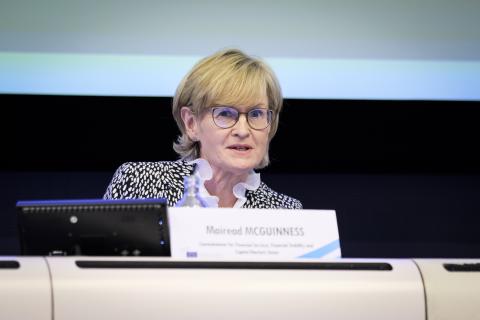
Na sua última reunião plenária, o Comité Económico e Social Europeu realizou um debate com a comissária Mairead McGuinness sobre a forma de alcançar um sistema económico e financeiro europeu mais ecológico, mais sustentável e mais digital.
Na reunião plenária, foram adotados vários pareceres para ajudar a abrir caminho para uma UE verdadeiramente mais sustentável. Num parecer de iniciativa, o CESE propõe a elaboração de uma série de novos indicadores para complementar o PIB e contribuir para a transição. Noutro parecer, o CESE apoia o objetivo de reorientar os investimentos, mas considera que uma grande parte das medidas propostas pela Comissão na sua estratégia renovada para o financiamento sustentável parecem, muitas vezes, demasiado hesitantes e não têm em conta o conceito fundamental de sustentabilidade social. Além disso, a taxonomia da UE não aborda os objetivos ambientais e sociais em pé de igualdade e deixa dúvidas sobre atividades económicas controversas. Por último, num terceiro parecer, o CESE congratula-se com a ideia de uma nova norma «voluntária» para as obrigações verdes europeias e formula recomendações essenciais sobre a forma de a transformar num instrumento verdadeiramente eficaz para ajudar os investidores a investirem em projetos que tenham um impacto positivo no ambiente. (tk)