European Economic
and Social Committee
European Economic
and Social Committee
The European Economic and Social Committee (EESC) is the voice of organised civil society in Europe.
Find out more about its role and structure at http://www.eesc.europa.eu/en/about
The EESC issues between 160 and 190 opinions, evaluation and information reports a year.
It also organises several annual initiatives and events with a focus on civil society and citizens’ participation such as the Civil Society Prize, the Civil Society Days, the Your Europe, Your Say youth plenary and the ECI Day.
Find the latest EESC opinions and publications at http://www.eesc.europa.eu/en/our-work/opinions-information-reports/opinions and http://www.eesc.europa.eu/en/our-work/publications-other-work/publications respectively.
The EESC is active in a wide range of areas, from social affairs to economy, energy and sustainability.
Learn more about our policy areas and policy highlights at http://www.eesc.europa.eu/en/policies
The EESC holds nine plenary sessions per year. It also organises many conferences, public hearings and high-level debates related to its work.
Find out more about our upcoming events at http://www.eesc.europa.eu/en/agenda/our-events/upcoming-events
Here you can find news and information about the EESC'swork, including its social media accounts, the EESC Info newsletter, photo galleries and videos.
Read the latest EESC news http://www.eesc.europa.eu/en/news-media/news and press releases http://www.eesc.europa.eu/en/news-media/press-releases
The EESC brings together representatives from all areas of organised civil society, who give their independent advice on EU policies and legislation. The EESC's326 Members are organised into three groups: Employers, Workers and Various Interests.
Find out more about our Members and groups at http://www.eesc.europa.eu/en/members-groups
The EESC has six sections, specialising in concrete topics of relevance to the citizens of the European Union, ranging from social to economic affairs, energy, environment, external relations or the internal market.
Find out more at http://www.eesc.europa.eu/en/sections-other-bodies
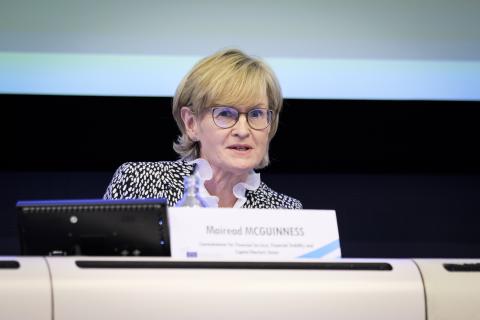
På sin seneste plenarforsamling havde Det Europæiske Økonomiske og Sociale Udvalg en debat med kommissær Mairead McGuinness om, hvordan man kan opnå et grønnere, mere bæredygtigt og mere digitaliseret europæisk økonomisk og finansielt system.
På plenarforsamlingen blev der vedtaget en række udtalelser, der skal bidrage til at bane vejen for et reelt mere bæredygtigt EU. I en af sine initiativudtalelser foreslår EØSU, at der udvikles en række nye indikatorer som supplement til BNP og som hjælp til omstillingen. I en anden udtalelse støtter EØSU målet om at omdirigere investeringer, men mener, at mange af de foranstaltninger, som Kommissionen foreslår i sin nye strategi for bæredygtig finansiering, ofte forekommer for tøvende og ser bort fra det kritiske begreb social bæredygtighed. Desuden vedrører EU's klassificeringsordning ikke miljømæssige og sociale mål i lige høj grad og giver anledning til tvivl om kontroversielle økonomiske aktiviteter. Endelig bifalder EØSU i en tredje udtalelse idéen om en ny frivillig europæisk standard for grønne obligationer og kommer med vigtige anbefalinger til, hvordan den kan omdannes til et virkelig effektivt instrument, der kan hjælpe med at lede investorerne i retning af projekter, der har en positiv indvirkning på miljøet. (tk)