European Economic
and Social Committee
European Economic
and Social Committee
The European Economic and Social Committee (EESC) is the voice of organised civil society in Europe.
Find out more about its role and structure at http://www.eesc.europa.eu/en/about
The EESC issues between 160 and 190 opinions, evaluation and information reports a year.
It also organises several annual initiatives and events with a focus on civil society and citizens’ participation such as the Civil Society Prize, the Civil Society Days, the Your Europe, Your Say youth plenary and the ECI Day.
Find the latest EESC opinions and publications at http://www.eesc.europa.eu/en/our-work/opinions-information-reports/opinions and http://www.eesc.europa.eu/en/our-work/publications-other-work/publications respectively.
The EESC is active in a wide range of areas, from social affairs to economy, energy and sustainability.
Learn more about our policy areas and policy highlights at http://www.eesc.europa.eu/en/policies
The EESC holds nine plenary sessions per year. It also organises many conferences, public hearings and high-level debates related to its work.
Find out more about our upcoming events at http://www.eesc.europa.eu/en/agenda/our-events/upcoming-events
Here you can find news and information about the EESC'swork, including its social media accounts, the EESC Info newsletter, photo galleries and videos.
Read the latest EESC news http://www.eesc.europa.eu/en/news-media/news and press releases http://www.eesc.europa.eu/en/news-media/press-releases
The EESC brings together representatives from all areas of organised civil society, who give their independent advice on EU policies and legislation. The EESC's326 Members are organised into three groups: Employers, Workers and Various Interests.
Find out more about our Members and groups at http://www.eesc.europa.eu/en/members-groups
The EESC has six sections, specialising in concrete topics of relevance to the citizens of the European Union, ranging from social to economic affairs, energy, environment, external relations or the internal market.
Find out more at http://www.eesc.europa.eu/en/sections-other-bodies
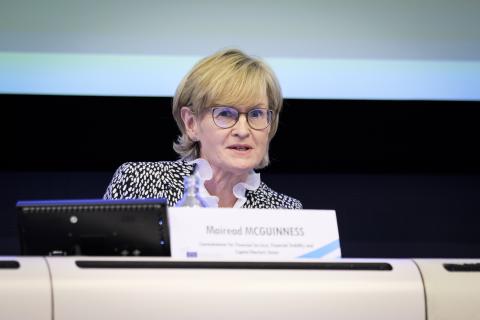
Az Európai Gazdasági és Szociális Bizottság legutóbbi, Mairead McGuinness európai biztos részvételével tartott plenáris ülésén vitát tartott arról, hogy miként lehet megvalósítani egy zöldebb, fenntarthatóbb és még jobban digitalizált gazdasági és pénzügyi rendszert Európában.
A plenáris ülésen számos véleményt fogadtak el, amelyek segítenek kikövezni az utat egy valóban fenntarthatóbb EU felé. Egyik saját kezdeményezésű véleményében az EGSZB egy sor új mutató kidolgozását javasolja a GDP kiegészítésére és az átállás megkönnyítésére. Egy másik véleményben az EGSZB támogatja a beruházások átirányításának célját, ugyanakkor úgy véli, hogy az Európai Bizottság megújult fenntartható finanszírozási stratégiájában javasolt intézkedések közül több túlságosan tétovának tűnik, és figyelmen kívül hagyja a társadalmi fenntarthatóság kulcsfontosságú fogalmát. Emellett az uniós taxonómia nem azonos mértékben veszi figyelembe a környezetvédelmi és társadalmi célokat, és kétségeket vet fel a vitatott gazdasági tevékenységek kezelésével kapcsolatban. Végül egy harmadik véleményében az EGSZB üdvözli egy új, önkéntes európai zöldkötvénystandard létrehozásának gondolatát, és kritikus ajánlásokat fogalmaz meg arra vonatkozóan, hogy ez a standard hogyan játszhat ténylegesen kulcsszerepet abban, hogy a befektetőket környezetbarát projektekbe való befektetésre ösztönözze. (tk)