
European Economic
and Social Committee
The EESC supports the revision of the Tobacco Taxation Directive
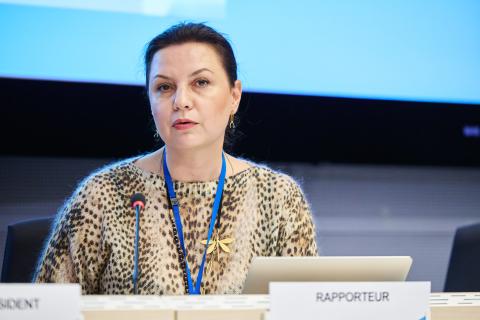
The European Economic and Social Committee (EESC) recognises the need to adapt the excise duty framework for tobacco products in line with market developments. However, it urges caution regarding excessive increases in excise duties, as these could lead to an increase in illicit trade.
On 18 February, the EESC adopted an opinion on the revision of the Tobacco Taxation Directive, which was tabled by the European Commission in 2025. To reflect new developments in the tobacco market and ensure the directive's effectiveness, the Commission proposed broadening its scope to cover new products, such as e-cigarettes, heated tobacco and nicotine pouches. These products would be subject to new minimum taxes, with the rates increasing to reduce disparities between those applied by Member States. In practical terms, the EU minimum rate would be adjusted according to each Member State's economic circumstances, based on general price levels. The Commission’s proposal also seeks to strengthen control measures for raw tobacco, which can be diverted to the illicit supply chain. The proposal is subject to a special legislative procedure, under which the EU Council must adopt the proposal unanimously after consulting the European Parliament.
The EESC supported the revision of the Tobacco Taxation Directive, recognising the need to adapt the excise duty framework to market developments. During the plenary debate, Mariya Mincheva, standing in for rapporteur Matteo Carlo Borsani, emphasised that any increase in tobacco duty must be proportionate, economically viable and beneficial to businesses, workers and society as a whole. She warned against sharp increases in duty, which could have adverse effects. In its opinion, the EESC therefore cautioned against abrupt or excessive rises in excise duty, noting that these could fuel illicit trade, undermine fiscal revenues and weaken public health outcomes. For this reason, the EESC recommended gradual adjustments to excise duties, accompanied by strengthened enforcement, customs cooperation and cross-border anti-smuggling measures. In addition, the Committee underlined that policy makers should involve social partners, through sharing of clear and transparent information on any policy measure and draft legislation, and consultation before proposing any future policies or legislation.
Furthermore, the EESC called for sufficient flexibility for Member States in their excise structures, including the option to choose between unit-based or weight-based taxation for heated tobacco products. This would allow Member States to take national market conditions into account while complying with EU-wide minimum rates. In line with the principles of subsidiarity and the fiscal sovereignty of Member States, the EESC stressed in its opinion that the Commission's use of delegated acts should be strictly limited to technical adjustments linked to inflation.
While embracing the commitment to reducing tobacco consumption, the EESC pointed out taxation alone cannot be the sole or primary means of achieving this aim. It called for consistent, risk-proportionate taxation to ensure that non-combustible and reduced-risk products are not taxed at the same rate as combustible tobacco products. This approach would align with the 'less harm, less tax' principle and the objectives of Europe's Beating Cancer Plan. At the same time, the EESC recommended improving legal clarity and harmonising product definitions, particularly by explicitly defining heated tobacco products and clearly distinguishing them from combustible products.
Additionally, the EESC called for a comprehensive mapping of existing jobs and skills in the tobacco sector, alongside an assessment of the medium- and long-term scenarios that would result from revising the Tobacco Tax Directive. As the EESC emphasised, clear forecasts on the proposal's potential impact on employment must also be developed.
Work organisation
Recommended for you
„Sinu Euroopa, Sinu arvamus“ 2023: noored soovivad läbipaistvamat, digitaalsemat ja lihtsamat ELi
News
23. ja 24. märtsil korraldas Euroopa Majandus- ja Sotsiaalkomitee 14. korda ürituse „Sinu Euroopa, Sinu arvamus“. Üritus tõi Brüsselisse 105 õpilast 35 koolist kõigist 27…
Algab kandideerimine Euroopa Majandus- ja Sotsiaalkomitee kodanikuühiskonna auhinnale, mille teemaks on vaimne tervis
News
Kodanikuühiskonna organisatsioonid, üksikisikud ja eraettevõtted saavad nüüd esitada oma mittetulunduslikke projekte, et konkureerida Euroopa Majandus- ja Sotsiaalkomitee auhinnale, mis on pühendatud…
Valimised 2024. aasta juunis: Euroopa Majandus- ja Sotsiaalkomitee kutsub eurooplasi üles hääletama ühtse ja demokraatliku Euroopa poolt
News
Uue Euroopa Parlamendi valimistel on palju kaalul, sest demokraatia on nõrgenemas kogu maailmas, desinformatsioon on laialt levinud ja rahulolematus kasvab, kuna inflatsioon kiireneb ja sõjaoht…
TENi sektsiooni esimees Baiba Miltoviča ja Euroopa Regioonide Komitee raportöör Andres Jaadla kirjutavad alla elamumajandust käsitlevale deklaratsioonile
News
14. novembril 2024 allkirjastatud ühisavalduses kutsuvad Euroopa Majandus- ja Sotsiaalkomitee transpordi, energeetika, infrastruktuuri ja infoühiskonna sektsiooni (TEN) esimees Baiba…
EL peab transpordisektori CO2 heite vähendamiseks viivitamatult keskenduma saastevabale vesinikule
News
Eestis toimunud konverentsil rõhutati, et vähese CO2 heitega vesinik on energiasüsteemi eduka ümberkujundamise põhielement, mille potentsiaali arendamiseks on aga vaja taristut ja rahastamist.Ürituse…