
European Economic
and Social Committee
The EESC supports the revision of the Tobacco Taxation Directive
The European Economic and Social Committee (EESC) recognises the need to adapt the excise duty framework for tobacco products in line with market developments. However, it urges caution regarding excessive increases in excise duties, as these could lead to an increase in illicit trade.
On 18 February, the EESC adopted an opinion on the revision of the Tobacco Taxation Directive, which was tabled by the European Commission in 2025. To reflect new developments in the tobacco market and ensure the directive's effectiveness, the Commission proposed broadening its scope to cover new products, such as e-cigarettes, heated tobacco and nicotine pouches. These products would be subject to new minimum taxes, with the rates increasing to reduce disparities between those applied by Member States. In practical terms, the EU minimum rate would be adjusted according to each Member State's economic circumstances, based on general price levels. The Commission’s proposal also seeks to strengthen control measures for raw tobacco, which can be diverted to the illicit supply chain. The proposal is subject to a special legislative procedure, under which the EU Council must adopt the proposal unanimously after consulting the European Parliament.
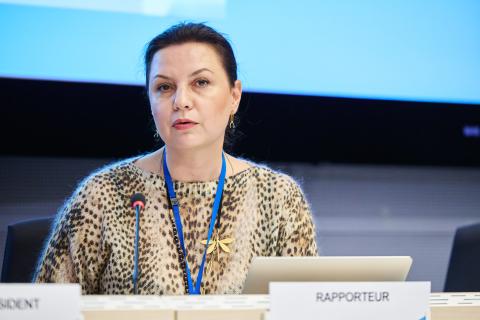
The EESC supported the revision of the Tobacco Taxation Directive, recognising the need to adapt the excise duty framework to market developments. During the plenary debate, Mariya Mincheva, standing in for rapporteur Matteo Carlo Borsani, emphasised that any increase in tobacco duty must be proportionate, economically viable and beneficial to businesses, workers and society as a whole. She warned against sharp increases in duty, which could have adverse effects. In its opinion, the EESC therefore cautioned against abrupt or excessive rises in excise duty, noting that these could fuel illicit trade, undermine fiscal revenues and weaken public health outcomes. For this reason, the EESC recommended gradual adjustments to excise duties, accompanied by strengthened enforcement, customs cooperation and cross-border anti-smuggling measures. In addition, the Committee underlined that policy makers should involve social partners, through sharing of clear and transparent information on any policy measure and draft legislation, and consultation before proposing any future policies or legislation.
Furthermore, the EESC called for sufficient flexibility for Member States in their excise structures, including the option to choose between unit-based or weight-based taxation for heated tobacco products. This would allow Member States to take national market conditions into account while complying with EU-wide minimum rates. In line with the principles of subsidiarity and the fiscal sovereignty of Member States, the EESC stressed in its opinion that the Commission's use of delegated acts should be strictly limited to technical adjustments linked to inflation.
While embracing the commitment to reducing tobacco consumption, the EESC pointed out taxation alone cannot be the sole or primary means of achieving this aim. It called for consistent, risk-proportionate taxation to ensure that non-combustible and reduced-risk products are not taxed at the same rate as combustible tobacco products. This approach would align with the 'less harm, less tax' principle and the objectives of Europe's Beating Cancer Plan. At the same time, the EESC recommended improving legal clarity and harmonising product definitions, particularly by explicitly defining heated tobacco products and clearly distinguishing them from combustible products.
Additionally, the EESC called for a comprehensive mapping of existing jobs and skills in the tobacco sector, alongside an assessment of the medium- and long-term scenarios that would result from revising the Tobacco Tax Directive. As the EESC emphasised, clear forecasts on the proposal's potential impact on employment must also be developed.
Work organisation
Recommended for you
YEYS! 2023: Mládež žiada transparentnejšiu, digitálnejšiu a jednoduchšiu EÚ
News
Európsky hospodársky a sociálny výbor (EHSV) usporiadal 23. a 24. marca 14. ročník podujatia Vaša Európa, váš názor (YEYS), ktoré priviedlo do Bruselu 105…
Slovenská organizácia Integra získava Cenu EHSV pre občiansku spoločnosť za boj proti stereotypom spájaným s duševnými poruchami
News
Európsky hospodársky a sociálny výbor (EHSV) sa tohto roku rozhodol udeliť Cenu pre občiansku spoločnosť projektom na podporu duševného zdravia. Víťazom sa stala írska charitatívna organizácia…
EHSV otvára nový ročník Ceny pre občiansku spoločnosť, ktorej ústrednou témou je duševné zdravie
News
Organizácie občianskej spoločnosti, jednotlivci a súkromné spoločnosti môžu odteraz predkladať svoje neziskové projekty a uchádzať sa o cenu EHSV venovanú podpore duševnej pohody…
Odovzdajte svoj hlas v európskych voľbách v júni 2024: EHSV vyzýva Európanov, aby hlasovali za zjednotenú a demokratickú Európu
News
Vzhľadom na celosvetový trend ústupu demokracie, rýchle šírenie dezinformácií a zvyšujúcu sa nespokojnosť v dôsledku nárastu inflácie a hrozby vojny, pôjde pri hlasovaní o novom…
Dezinformácie a nedostatok záujmu sú hlavnými príčinami vysokej neúčasti voličov vo voľbách do Európskeho parlamentu
News
Európania musia poznať konkrétny vplyv rozhodnutí EÚ na ich životy, čo ich pomôže mobilizovať sa k účasti na voľbách. Rôznym krajinám EÚ je potrebné prispôsobiť rôzne posolstvá. Je potrebné preto…