
European Economic
and Social Committee
Civil society wants formal recognition of permanent materials in EU legislation
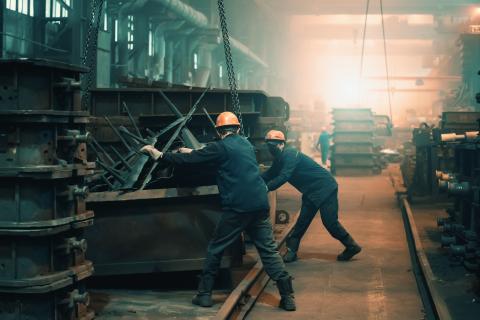
At its December 2025 plenary session, the European Economic and Social Committee (EESC) adopted an own-initiative opinion on Facilitating the potential of permanent materials in the EU circular economy. The opinion stresses the importance of steel, aluminium and glass – materials that retain their properties through multiple recycling cycles – for achieving a truly circular EU economy.
Permanent materials allow closed-loop recycling without quality loss. Recycling aluminium saves 95% of the energy required for primary production and reduces carbon emissions from 15.1 tonnes of CO₂ equivalent per tonne for primary aluminium to 0.52 tonnes of CO₂ equivalent per tonne for recycled material. Glass recycling reduces energy use by 3% and CO₂ emissions by 5% for each 10% increase in recycled content, while every tonne of recycled glass saves 670 kg of CO₂. Tinplate packaging achieves recycling rates above 80% in several Member States, delivering resource, energy, and emissions savings.
EESC member and rapporteur for the opinion Andrea Mone underlined the social dimension of the transition: ‘We need access to up-skilling and re-skilling to facilitate smooth job transitions and enable workers to benefit from the circular economy.’ While co-rapporteur Michal Pintér stressed the need for stronger rules: ‘We need concrete legislation to move from slogans to practical and viable models.’
To fully realise the potential of permanent materials, the EESC recommends:
- Legislative recognition: Formally acknowledge permanent materials in EU legislation and distinguish them from materials that degrade over repeated recycling.
- Waste collection and recycling targets: Achieve 90% separate collection of packaging waste by 2030.
- Extended Producer Responsibility (EPR): Harmonise schemes across the Member States, implement eco-modulated fees, and ring-fence revenues for re-investment in the same material streams.
- Infrastructure investment: Prioritise modern collection, sorting, and recycling infrastructure, especially in lower-performing regions.
- Consumer engagement: Introduce EU-wide labelling, awareness campaigns, and measures to improve household recycling participation.
- Socially sustainable transition: Ensure workers’ access to upskilling and re-skilling, job-to-job support, social dialogue, and collective bargaining to maintain quality employment as circular business models expand.
By mainstreaming permanent materials and following these recommendations, the EU can reduce reliance on virgin resources, enhance climate neutrality, and strengthen green industrial leadership while maximising the environmental, economic, and social benefits.
Work organisation
Recommended for you
Η εργαλειοποίηση των μεταναστών και η προσφυγική κρίση της Ουκρανίας επιβάλλουν ένα νέο ξεκίνημα για τη μεταναστευτική πολιτική
News
Η κρατική εργαλειοποίηση των μεταναστών, που αποσκοπεί στην αποσταθεροποίηση της ΕΕ, και ο τρέχων πόλεμος στην Ουκρανία, που οδηγεί σε πρωτόγνωρη εισροή προσφύγων, επιβάλλουν την επανεξέταση της…
YEYS! 2023: Οι νέοι ζητούν μια πιο διαφανή, ψηφιακή και απλοποιημένη ΕΕ
News
Στις 23 και 24 Μαρτίου, η Ευρωπαϊκή Οικονομική και Κοινωνική Επιτροπή (ΕΟΚΕ) φιλοξένησε την 14η διοργάνωση της εκδήλωσης «Η δική σου Ευρώπη, η δική σου φωνή!» (YEYS!), η οποία προσέλκυσε στις…
Η ΕΕ χρειάζεται αποτελεσματικότερη πολυμέρεια για την αντιμετώπιση των κινδύνων που σχετίζονται με την ασφάλεια στη θάλασσα, επισημαίνει η ΕΟΚΕ
News
Η Ευρωπαϊκή Οικονομική και Κοινωνική Επιτροπή (ΕΟΚΕ) ζητεί περισσότερες κοινές δράσεις σχετικά με τη στρατηγική της ΕΕ για την ασφάλεια στη θάλασσα και το σχετικό σχέδιο δράσης, που αποσκοπούν στη…
Η ΕΟΚΕ δρομολογεί τη διαδικασία υποβολής υποψηφιοτήτων για το Βραβείο της Κοινωνίας των Πολιτών, το οποίο θα αφορά την ψυχική υγεία
News
Οι οργανώσεις της κοινωνίας των πολιτών, οι ιδιώτες και οι ιδιωτικές εταιρείες μπορούν τώρα να υποβάλουν τα μη κερδοσκοπικά έργα τους για το βραβείο της ΕΟΚΕ που είναι αφιερωμένο στη στήριξη της…
#ReskillEU — Το εργατικό δυναμικό της Ευρώπης στους τομείς της ενέργειας και των μεταφορών χρειάζεται νέες δεξιότητες για να κάνει πραγματικότητα την απανθρακοποίηση
News
Για να επιτύχει η απανθρακοποίηση των τομέων της ενέργειας και των μεταφορών της ΕΕ, οι εν λόγω τομείς χρειάζονται εργαζομένους εξοπλισμένους με «νέες» δεξιότητες, προειδοποιεί η Ευρωπαϊκή Οικονομική…