
European Economic
and Social Committee
Civil society wants formal recognition of permanent materials in EU legislation
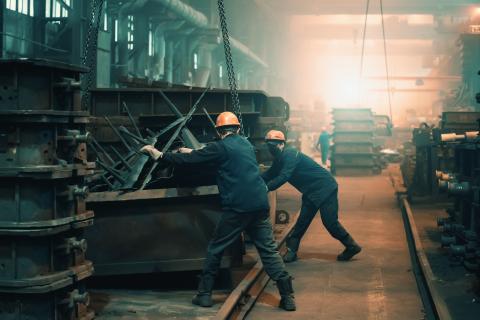
At its December 2025 plenary session, the European Economic and Social Committee (EESC) adopted an own-initiative opinion on Facilitating the potential of permanent materials in the EU circular economy. The opinion stresses the importance of steel, aluminium and glass – materials that retain their properties through multiple recycling cycles – for achieving a truly circular EU economy.
Permanent materials allow closed-loop recycling without quality loss. Recycling aluminium saves 95% of the energy required for primary production and reduces carbon emissions from 15.1 tonnes of CO₂ equivalent per tonne for primary aluminium to 0.52 tonnes of CO₂ equivalent per tonne for recycled material. Glass recycling reduces energy use by 3% and CO₂ emissions by 5% for each 10% increase in recycled content, while every tonne of recycled glass saves 670 kg of CO₂. Tinplate packaging achieves recycling rates above 80% in several Member States, delivering resource, energy, and emissions savings.
EESC member and rapporteur for the opinion Andrea Mone underlined the social dimension of the transition: ‘We need access to up-skilling and re-skilling to facilitate smooth job transitions and enable workers to benefit from the circular economy.’ While co-rapporteur Michal Pintér stressed the need for stronger rules: ‘We need concrete legislation to move from slogans to practical and viable models.’
To fully realise the potential of permanent materials, the EESC recommends:
- Legislative recognition: Formally acknowledge permanent materials in EU legislation and distinguish them from materials that degrade over repeated recycling.
- Waste collection and recycling targets: Achieve 90% separate collection of packaging waste by 2030.
- Extended Producer Responsibility (EPR): Harmonise schemes across the Member States, implement eco-modulated fees, and ring-fence revenues for re-investment in the same material streams.
- Infrastructure investment: Prioritise modern collection, sorting, and recycling infrastructure, especially in lower-performing regions.
- Consumer engagement: Introduce EU-wide labelling, awareness campaigns, and measures to improve household recycling participation.
- Socially sustainable transition: Ensure workers’ access to upskilling and re-skilling, job-to-job support, social dialogue, and collective bargaining to maintain quality employment as circular business models expand.
By mainstreaming permanent materials and following these recommendations, the EU can reduce reliance on virgin resources, enhance climate neutrality, and strengthen green industrial leadership while maximising the environmental, economic, and social benefits.
Work organisation
Recommended for you
YEYS! 2023: De unge ønsker et mere gennemsigtigt, digitalt og forenklet EU
News
Den 23.-24. marts var Det Europæiske Økonomiske og Sociale Udvalg (EØSU) vært for den 14. udgave af arrangement Dit Europa, din mening! (YEYS!), hvor 105 elever fra 35 skoler fra alle 27 EU…
EØSU åbner for ansøgninger til civilsamfundsprisen, som i år har fokus på mental sundhed
News
Civilsamfundsorganisationer, enkeltpersoner og private virksomheder kan nu indstille deres nonprofitprojekter til EØSU's pris til støtte for europæernes mentale trivsel Det Europæiske Økonomiske og…
Gør brug af din stemme i juni 2024: EØSU opfordrer europæerne til at stemme for et forenet og demokratisk Europa
News
Det går tilbage for demokratiet i store dele af verden, misinformationen florerer, og der er stadig større utilfredshed på grund af stigende inflation og truslen om krig, som lurer i baggrunden. Der…
Kunstig intelligens kan fremme behandlingen af sjældne sygdomme
News
På en konference afholdt i Danmark af Det Europæiske Økonomiske og Sociale Udvalg (EØSU) fremhævedes den afgørende rolle, som kunstig intelligens kan spille i udviklingen af nye fremtidsorienterede…
Det danske rådsformandskab vil arbejde for "et stærkt Europa i en verden i forandring"
News
I juli var Det Europæiske Økonomiske og Sociale Udvalgs (EØSU) plenarforsamling vært for en debat om de politiske prioriteter for det nuværende formandskab for Rådet for Den Europæiske Union. De…