
European Economic
and Social Committee
Civil society wants formal recognition of permanent materials in EU legislation
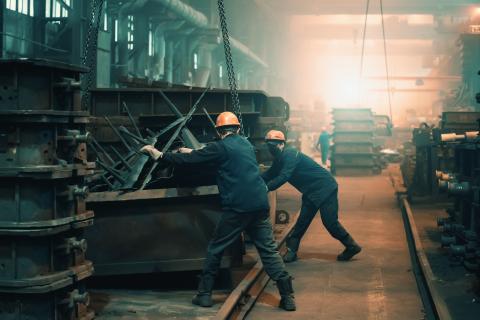
At its December 2025 plenary session, the European Economic and Social Committee (EESC) adopted an own-initiative opinion on Facilitating the potential of permanent materials in the EU circular economy. The opinion stresses the importance of steel, aluminium and glass – materials that retain their properties through multiple recycling cycles – for achieving a truly circular EU economy.
Permanent materials allow closed-loop recycling without quality loss. Recycling aluminium saves 95% of the energy required for primary production and reduces carbon emissions from 15.1 tonnes of CO₂ equivalent per tonne for primary aluminium to 0.52 tonnes of CO₂ equivalent per tonne for recycled material. Glass recycling reduces energy use by 3% and CO₂ emissions by 5% for each 10% increase in recycled content, while every tonne of recycled glass saves 670 kg of CO₂. Tinplate packaging achieves recycling rates above 80% in several Member States, delivering resource, energy, and emissions savings.
EESC member and rapporteur for the opinion Andrea Mone underlined the social dimension of the transition: ‘We need access to up-skilling and re-skilling to facilitate smooth job transitions and enable workers to benefit from the circular economy.’ While co-rapporteur Michal Pintér stressed the need for stronger rules: ‘We need concrete legislation to move from slogans to practical and viable models.’
To fully realise the potential of permanent materials, the EESC recommends:
- Legislative recognition: Formally acknowledge permanent materials in EU legislation and distinguish them from materials that degrade over repeated recycling.
- Waste collection and recycling targets: Achieve 90% separate collection of packaging waste by 2030.
- Extended Producer Responsibility (EPR): Harmonise schemes across the Member States, implement eco-modulated fees, and ring-fence revenues for re-investment in the same material streams.
- Infrastructure investment: Prioritise modern collection, sorting, and recycling infrastructure, especially in lower-performing regions.
- Consumer engagement: Introduce EU-wide labelling, awareness campaigns, and measures to improve household recycling participation.
- Socially sustainable transition: Ensure workers’ access to upskilling and re-skilling, job-to-job support, social dialogue, and collective bargaining to maintain quality employment as circular business models expand.
By mainstreaming permanent materials and following these recommendations, the EU can reduce reliance on virgin resources, enhance climate neutrality, and strengthen green industrial leadership while maximising the environmental, economic, and social benefits.
Work organisation
Recommended for you
YEYS! 2023: Mládež žiada transparentnejšiu, digitálnejšiu a jednoduchšiu EÚ
News
Európsky hospodársky a sociálny výbor (EHSV) usporiadal 23. a 24. marca 14. ročník podujatia Vaša Európa, váš názor (YEYS), ktoré priviedlo do Bruselu 105…
Slovenská organizácia Integra získava Cenu EHSV pre občiansku spoločnosť za boj proti stereotypom spájaným s duševnými poruchami
News
Európsky hospodársky a sociálny výbor (EHSV) sa tohto roku rozhodol udeliť Cenu pre občiansku spoločnosť projektom na podporu duševného zdravia. Víťazom sa stala írska charitatívna organizácia…
EHSV otvára nový ročník Ceny pre občiansku spoločnosť, ktorej ústrednou témou je duševné zdravie
News
Organizácie občianskej spoločnosti, jednotlivci a súkromné spoločnosti môžu odteraz predkladať svoje neziskové projekty a uchádzať sa o cenu EHSV venovanú podpore duševnej pohody…
Odovzdajte svoj hlas v európskych voľbách v júni 2024: EHSV vyzýva Európanov, aby hlasovali za zjednotenú a demokratickú Európu
News
Vzhľadom na celosvetový trend ústupu demokracie, rýchle šírenie dezinformácií a zvyšujúcu sa nespokojnosť v dôsledku nárastu inflácie a hrozby vojny, pôjde pri hlasovaní o novom…
Dezinformácie a nedostatok záujmu sú hlavnými príčinami vysokej neúčasti voličov vo voľbách do Európskeho parlamentu
News
Európania musia poznať konkrétny vplyv rozhodnutí EÚ na ich životy, čo ich pomôže mobilizovať sa k účasti na voľbách. Rôznym krajinám EÚ je potrebné prispôsobiť rôzne posolstvá. Je potrebné preto…