
European Economic
and Social Committee
Civil society wants formal recognition of permanent materials in EU legislation
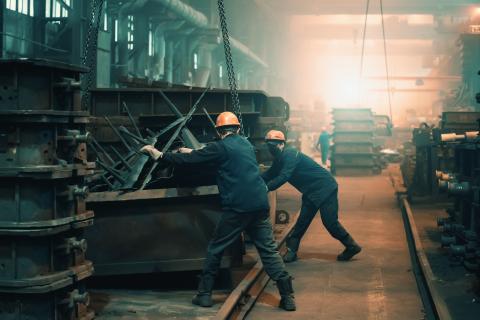
At its December 2025 plenary session, the European Economic and Social Committee (EESC) adopted an own-initiative opinion on Facilitating the potential of permanent materials in the EU circular economy. The opinion stresses the importance of steel, aluminium and glass – materials that retain their properties through multiple recycling cycles – for achieving a truly circular EU economy.
Permanent materials allow closed-loop recycling without quality loss. Recycling aluminium saves 95% of the energy required for primary production and reduces carbon emissions from 15.1 tonnes of CO₂ equivalent per tonne for primary aluminium to 0.52 tonnes of CO₂ equivalent per tonne for recycled material. Glass recycling reduces energy use by 3% and CO₂ emissions by 5% for each 10% increase in recycled content, while every tonne of recycled glass saves 670 kg of CO₂. Tinplate packaging achieves recycling rates above 80% in several Member States, delivering resource, energy, and emissions savings.
EESC member and rapporteur for the opinion Andrea Mone underlined the social dimension of the transition: ‘We need access to up-skilling and re-skilling to facilitate smooth job transitions and enable workers to benefit from the circular economy.’ While co-rapporteur Michal Pintér stressed the need for stronger rules: ‘We need concrete legislation to move from slogans to practical and viable models.’
To fully realise the potential of permanent materials, the EESC recommends:
- Legislative recognition: Formally acknowledge permanent materials in EU legislation and distinguish them from materials that degrade over repeated recycling.
- Waste collection and recycling targets: Achieve 90% separate collection of packaging waste by 2030.
- Extended Producer Responsibility (EPR): Harmonise schemes across the Member States, implement eco-modulated fees, and ring-fence revenues for re-investment in the same material streams.
- Infrastructure investment: Prioritise modern collection, sorting, and recycling infrastructure, especially in lower-performing regions.
- Consumer engagement: Introduce EU-wide labelling, awareness campaigns, and measures to improve household recycling participation.
- Socially sustainable transition: Ensure workers’ access to upskilling and re-skilling, job-to-job support, social dialogue, and collective bargaining to maintain quality employment as circular business models expand.
By mainstreaming permanent materials and following these recommendations, the EU can reduce reliance on virgin resources, enhance climate neutrality, and strengthen green industrial leadership while maximising the environmental, economic, and social benefits.
Work organisation
Recommended for you
Presidentes do CESE e do CR debatem desafios comuns para o futuro da Europa
News
Na reunião plenária de julho do Comité Económico e Social Europeu (CESE), a sua presidente, Christa Schweng, e o presidente recentemente eleito do Comité das Regiões Europeu (CR), Vasco Alves…
Movimento Transformers entre os finalistas do Prémio CESE para a Sociedade Civil dedicado à juventude
News
A associação sem fins lucrativos portuguesa Movimento Transformers figura na lista de finalistas do Prémio CESE para a Sociedade Civil de 2022 que, este ano, é atribuído a duas categorias, a saber,…
Associação portuguesa Movimento Transformers recebe Prémio CESE para a Sociedade Civil 2022 pelo apoio a jovens desfavorecidos
News
O Movimento Transformers é uma das organizações sem fins lucrativos que o Comité Económico e Social Europeu (CESE) distinguiu pelos seus projetos em prol da juventude. O Movimento Transformers…
«A tua Europa, a tua voz!» de 2023: jovens reclamam uma UE mais transparente, digital e simplificada
News
Em 23 e 24 de março, o Comité Económico e Social Europeu (CESE) acolheu a 14.ª edição do evento «A tua Europa, a tua voz!», que reuniu em Bruxelas 105 alunos de 35 escolas dos 27 Estados‑Membros da…
#RareDiseases – UE precisa de estratégia para ajudar 36 milhões de pessoas com doenças raras na Europa
News
Na conferência que organizou em Bilbau, o Comité Económico e Social Europeu (CESE) instou a União Europeia a lançar um plano de ação europeu para reforçar a cooperação entre os sistemas nacionais de…