
European Economic
and Social Committee
Civil society wants formal recognition of permanent materials in EU legislation
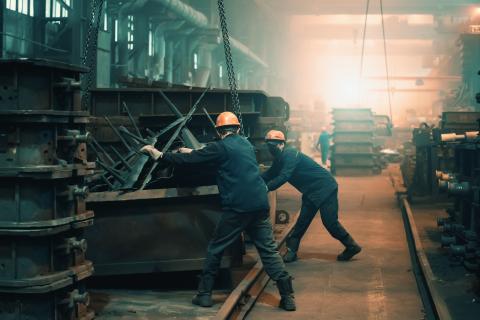
At its December 2025 plenary session, the European Economic and Social Committee (EESC) adopted an own-initiative opinion on Facilitating the potential of permanent materials in the EU circular economy. The opinion stresses the importance of steel, aluminium and glass – materials that retain their properties through multiple recycling cycles – for achieving a truly circular EU economy.
Permanent materials allow closed-loop recycling without quality loss. Recycling aluminium saves 95% of the energy required for primary production and reduces carbon emissions from 15.1 tonnes of CO₂ equivalent per tonne for primary aluminium to 0.52 tonnes of CO₂ equivalent per tonne for recycled material. Glass recycling reduces energy use by 3% and CO₂ emissions by 5% for each 10% increase in recycled content, while every tonne of recycled glass saves 670 kg of CO₂. Tinplate packaging achieves recycling rates above 80% in several Member States, delivering resource, energy, and emissions savings.
EESC member and rapporteur for the opinion Andrea Mone underlined the social dimension of the transition: ‘We need access to up-skilling and re-skilling to facilitate smooth job transitions and enable workers to benefit from the circular economy.’ While co-rapporteur Michal Pintér stressed the need for stronger rules: ‘We need concrete legislation to move from slogans to practical and viable models.’
To fully realise the potential of permanent materials, the EESC recommends:
- Legislative recognition: Formally acknowledge permanent materials in EU legislation and distinguish them from materials that degrade over repeated recycling.
- Waste collection and recycling targets: Achieve 90% separate collection of packaging waste by 2030.
- Extended Producer Responsibility (EPR): Harmonise schemes across the Member States, implement eco-modulated fees, and ring-fence revenues for re-investment in the same material streams.
- Infrastructure investment: Prioritise modern collection, sorting, and recycling infrastructure, especially in lower-performing regions.
- Consumer engagement: Introduce EU-wide labelling, awareness campaigns, and measures to improve household recycling participation.
- Socially sustainable transition: Ensure workers’ access to upskilling and re-skilling, job-to-job support, social dialogue, and collective bargaining to maintain quality employment as circular business models expand.
By mainstreaming permanent materials and following these recommendations, the EU can reduce reliance on virgin resources, enhance climate neutrality, and strengthen green industrial leadership while maximising the environmental, economic, and social benefits.
Work organisation
Recommended for you
Skrajni čas za vlaganje v mlade na Zahodnem Balkanu
News
Da bi vlade držav Zahodnega Balkana svojim državljanom zagotovile boljšo prihodnost, se morajo lotiti reševanja težav, s katerimi se srečujejo mladi, ki imajo ključno vlogo pri njenem ustvarjanju.…
Vaša Evropa, vaš glas! v letu 2023: Mladi si želijo, da bi bila EU preglednejša, bolj digitalna in enostavnejša
News
Evropski ekonomsko-socialni odbor (EESO) je 23. in 24. marca gostil dogodek Vaša Evropa, vaš glas! Potekal je v Bruslju, udeležilo pa se ga je 105 dijakov 35 šol iz vseh 27 držav članic EU in sedem…
Začetek zbiranja prijav za nagrade za civilno družbo EESO na temo duševnega zdravja
News
Organizacije civilne družbe, posamezniki in zasebna podjetja lahko svoje nepridobitne projekte prijavijo za nagrado EESO, namenjeno spodbujanju duševnega zdravja Evropejcev Evropski ekonomsko…
Oddajte svoj glas junija 2024: EESO poziva Evropejce, naj volijo za enotno in demokratično Evropo
News
Demokracija po vsem svetu nazaduje, širijo se dezinformacije in vse več je nezadovoljstva zaradi naraščajoče inflacije ter preteče nevarnosti vojne, zato so letošnje evropske volitve, na katerih bodo…
Ohranjanje zagona širitve EU: prizadevanje civilne družbe, da bi s postopnim vključevanjem prinesla koristi Zahodnemu Balkanu
News
Evropski ekonomsko-socialni odbor (EESO) je 20 let po pristopu Slovenije k EU v Ljubljani zbral politične voditelje in voditelje civilne družbe, da bi obeležili to simbolično obletnico in poudarili…