European Economic
and Social Committee
European Economic
and Social Committee
The European Economic and Social Committee (EESC) is the voice of organised civil society in Europe.
Find out more about its role and structure at http://www.eesc.europa.eu/en/about
The EESC issues between 160 and 190 opinions, evaluation and information reports a year.
It also organises several annual initiatives and events with a focus on civil society and citizens’ participation such as the Civil Society Prize, the Civil Society Days, the Your Europe, Your Say youth plenary and the ECI Day.
Find the latest EESC opinions and publications at http://www.eesc.europa.eu/en/our-work/opinions-information-reports/opinions and http://www.eesc.europa.eu/en/our-work/publications-other-work/publications respectively.
The EESC is active in a wide range of areas, from social affairs to economy, energy and sustainability.
Learn more about our policy areas and policy highlights at http://www.eesc.europa.eu/en/policies
The EESC holds nine plenary sessions per year. It also organises many conferences, public hearings and high-level debates related to its work.
Find out more about our upcoming events at http://www.eesc.europa.eu/en/agenda/our-events/upcoming-events
Here you can find news and information about the EESC'swork, including its social media accounts, the EESC Info newsletter, photo galleries and videos.
Read the latest EESC news http://www.eesc.europa.eu/en/news-media/news and press releases http://www.eesc.europa.eu/en/news-media/press-releases
The EESC brings together representatives from all areas of organised civil society, who give their independent advice on EU policies and legislation. The EESC's326 Members are organised into three groups: Employers, Workers and Various Interests.
Find out more about our Members and groups at http://www.eesc.europa.eu/en/members-groups
The EESC has six sections, specialising in concrete topics of relevance to the citizens of the European Union, ranging from social to economic affairs, energy, environment, external relations or the internal market.
Find out more at http://www.eesc.europa.eu/en/sections-other-bodies
av EESK:s Arbetstagargrupp
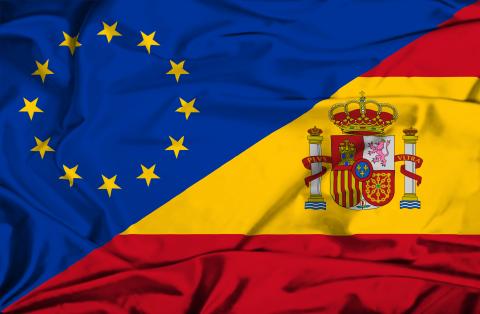
Spanien planerar att sätta EU:s sociala dimension i centrum för sitt halvårslånga EU-ordförandeskap, vilket innebär ett rekordhögt antal remisser till Europeiska ekonomiska och sociala kommittén om några av dagens stora sociala frågor.
Spanien kommer att överta ordförandeskapet i Europeiska unionens råd i juli, när vi närmar oss slutsträckan av Ursula von der Leyens mandatperiod och upptakten inför valet till Europaparlamentet 2024. Genom att öppna upp en väg inte bara under denna lagstiftningsperiod, utan även för framtida prioriteringar under den kommande, slår Spanien tydligt fast vilka sociala aspekter man förväntar sig att Europa tar itu med och sin önskan att återuppta några av de mest kontroversiella ärendena i sociala frågor och få igenom dem.
Det kanske inte kommer som en överraskning, således, att Spanien har begärt ett rekordhögt antal förberedande yttranden från EESK – inte mindre än tjugo. De frågor som ska behandlas i dessa yttranden sträcker sig från protokollet om sociala framsteg, som EESK lyfte fram vid konferensen om Europas framtid (och som i slutändan inkluderades i rekommendationerna), till frågor som demokrati i arbetslivet, gröna kollektivförhandlingar, psykisk hälsa och otrygghet, men även förslaget om ett förfarande vid sociala obalanser. EESK håller redan på att slutföra arbetet med vissa av dessa yttranden och kommer därför att vara redo att bidra till den politiska processen redan från start. (ppr)