European Economic
and Social Committee
European Economic
and Social Committee
The European Economic and Social Committee (EESC) is the voice of organised civil society in Europe.
Find out more about its role and structure at http://www.eesc.europa.eu/en/about
The EESC issues between 160 and 190 opinions, evaluation and information reports a year.
It also organises several annual initiatives and events with a focus on civil society and citizens’ participation such as the Civil Society Prize, the Civil Society Days, the Your Europe, Your Say youth plenary and the ECI Day.
Find the latest EESC opinions and publications at http://www.eesc.europa.eu/en/our-work/opinions-information-reports/opinions and http://www.eesc.europa.eu/en/our-work/publications-other-work/publications respectively.
The EESC is active in a wide range of areas, from social affairs to economy, energy and sustainability.
Learn more about our policy areas and policy highlights at http://www.eesc.europa.eu/en/policies
The EESC holds nine plenary sessions per year. It also organises many conferences, public hearings and high-level debates related to its work.
Find out more about our upcoming events at http://www.eesc.europa.eu/en/agenda/our-events/upcoming-events
Here you can find news and information about the EESC'swork, including its social media accounts, the EESC Info newsletter, photo galleries and videos.
Read the latest EESC news http://www.eesc.europa.eu/en/news-media/news and press releases http://www.eesc.europa.eu/en/news-media/press-releases
The EESC brings together representatives from all areas of organised civil society, who give their independent advice on EU policies and legislation. The EESC's326 Members are organised into three groups: Employers, Workers and Various Interests.
Find out more about our Members and groups at http://www.eesc.europa.eu/en/members-groups
The EESC has six sections, specialising in concrete topics of relevance to the citizens of the European Union, ranging from social to economic affairs, energy, environment, external relations or the internal market.
Find out more at http://www.eesc.europa.eu/en/sections-other-bodies
Pripravila skupina delojemalcev v EESO
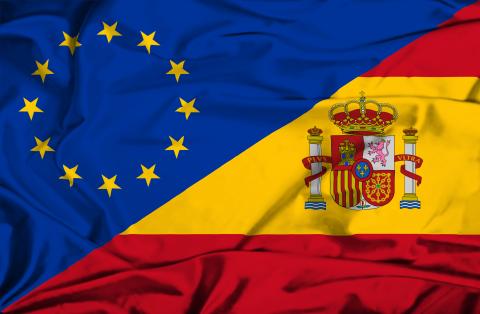
Španija namerava socialno razsežnost EU postaviti v središče svojega šestmesečnega predsedovanja, kar za Evropski ekonomsko-socialni odbor pomeni rekordno število posvetovanj o nekaterih danes najpomembnejših socialnih vprašanjih.
Španija bo predsedstvo Sveta EU prevzela julija letos, v času, ko se začenja zadnji del mandata predsednice Von der Leyen pred evropskimi volitvami leta 2024. Tako bo ta država ne samo usmerjala delo ob koncu sedanjega mandata, temveč bo tudi sooblikovala prednostne naloge v prihodnjem. Španija je jasno poudarila, da od Evrope pričakuje obravnavo nekaterih socialnih vidikov, na katere je opozorila, in izrazila pripravljenost, da odpre nekaj najbolj spornih socialnih dosjejev in doseže napredek.
Zato verjetno ne preseneča, da je EESO zaprosila za izredno veliko število raziskovalnih mnenj – kar 20. Ta segajo od protokola o socialnem napredku, za katerega se je EESO zavzel na Konferenci o prihodnosti Evrope (in ki je bil na koncu vključen v priporočila), in vprašanj, povezanih z demokracijo na delovnem mestu, pa vse do zelenih kolektivnih pogajanj, duševnega zdravja in prekarnih zaposlitev ter tudi postopka v zvezi s socialnimi neravnotežji. EESO že zaključuje delo v zvezi z nekaterimi naštetimi temami, zato bo pripravljen, da že od začetka prispeva k političnemu procesu. (ppr)