
European Economic
and Social Committee
Ako vyriešiť energetickú krízu: organizovaná občianska spoločnosť žiada, aby sa k energetickej transformácii pristupovalo realisticky a pragmaticky
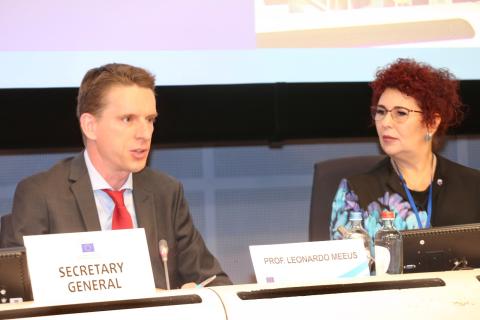
Pokiaľ ide o dekarbonizáciu energetického systému EÚ, EHSV je odhodlaný a pevne rozhodnutý. Vyzýva tvorcov politík EÚ, aby riešili dôsledky po desaťročia trvajúcej energetickej závislosti.
Týmito slovami predsedníčka EHSV Christa Schweng otvorila diskusiu o energetickej transformácii a strategickej autonómii EÚ na plenárnom zasadnutí 26. októbra 2022. Pri tejto príležitosti bol hosťom EHSV profesor Leonardo Meeus z Európskeho univerzitného inštitútu vo Florencii.
„Na zelenej transformácii musíme pracovať takým tempom, aby podniky a spoločnosť dokázali držať krok, pričom treba zaviesť sprievodné opatrenia, ktoré zabezpečia konkurencieschopnosť Európy vo svetovom meradle a inováciu,“ zdôraznila predsedníčka Schweng. Dodala, že „EÚ má potenciál znížiť svoju závislosť od dovozu energie rozvojom svojich miestnych kapacít v oblasti energie z obnoviteľných zdrojov, treba však zaistiť náležité stimuly pre investície“.
Profesor Meeus spomenul navrhovanú reformu trhu EÚ s elektrinou z dielne Európskej komisie, pričom upozornil, že súčasný trh s elektrinou, ktorý sme budovali uplynulých vyše 20 rokov, môže byť súčasťou našej budúcnosti, ak sa doplní a skombinuje s novými nástrojmi na podporu spotrebiteľov a modernizáciu sietí.
Diskusia bola spojená s prijatím stanoviska na tému Strategická vízia energetickej transformácie s cieľom umožniť strategickú autonómiu EÚ, ktoré vypracovali Thomas Kattnig, Lutz Ribbe a Tomasz Andrzej Wróblewski
Stanovisko prezentuje predstavu EHSV o energetickej transformácii a jej úlohe v úsilí dosiahnuť strategickú autonómiu EÚ, pričom sa treba zamerať na urýchlenie dekarbonizácie, zmenšenie závislosti od dovozu energie, väčšie stotožnenie s transformáciou energetiky zo strany komunít aj podnikov a na podporu pre zraniteľné domácnosti. (mp)