
European Economic
and Social Committee
De energiecrisis bestrijden: maatschappelijk middenveld roept op tot een realistische en pragmatische benadering van de energietransitie
Het EESC zet zich vastberaden in voor decarbonisatie van het energiesysteem van de EU en roept EU-beleidsmakers op om de gevolgen van de decennialange energieafhankelijkheid aan te pakken.
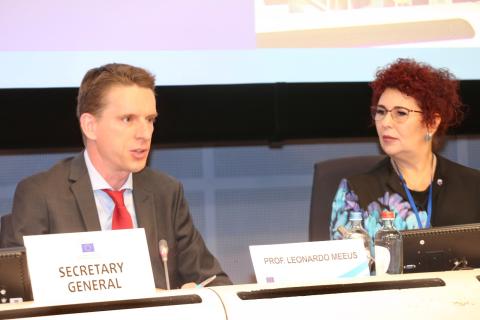
Met deze woorden opende EESC-voorzitter Christa Schweng op 26 oktober 2022 een debat van de voltallige vergadering over de energietransitie en strategische autonomie van de EU. Professor Leonardo Meeus van het Europees Universitair Instituut in Florence was daarbij te gast.
“We moeten de groene transitie doorvoeren in een tempo dat bedrijven en samenlevingen kunnen bijbenen, met flankerende maatregelen die Europa in staat stellen te innoveren en de wereldwijde concurrentie het hoofd te bieden,” aldus Schweng. “De EU kan haar afhankelijkheid van ingevoerde energie verminderen door haar eigen capaciteit op het gebied van hernieuwbare energie uit te bouwen, maar dit vergt wel de juiste investeringsprikkels.”
Onder verwijzing naar de door de Europese Commissie voorgestelde hervormingen van de EU-elektriciteitsmarkt stelde professor Meeus dat de huidige elektriciteitsmarkt, die in de afgelopen 20 jaar is opgebouwd, ook deel kan uitmaken van onze toekomst, mits we die markt aanvullen en combineren met nieuwe instrumenten om de consument te laten meedoen en netwerken te moderniseren.
Het debat vond plaats in verband met de behandeling van het advies van het EESC “Een strategische visie op de energietransitie om de strategische autonomie van de EU mogelijk te maken”, dat is opgesteld door Thomas Kattnig, Lutz Ribbe en Tomasz Andrzej Wróblewski.
In het advies geeft het EESC zijn visie op de energietransitie en de rol daarvan bij de inspanningen om de EU strategisch autonoom te maken. De aandacht gaat vooral uit naar het versnellen van de decarbonisatie, het verminderen van de afhankelijkheid van geïmporteerde energie, het vergroten van de actieve betrokkenheid van gemeenschappen en bedrijven en het ondersteunen van kwetsbare huishoudens. (mp)