European Economic
and Social Committee
European Economic
and Social Committee
The European Economic and Social Committee (EESC) is the voice of organised civil society in Europe.
Find out more about its role and structure at http://www.eesc.europa.eu/en/about
The EESC issues between 160 and 190 opinions, evaluation and information reports a year.
It also organises several annual initiatives and events with a focus on civil society and citizens’ participation such as the Civil Society Prize, the Civil Society Days, the Your Europe, Your Say youth plenary and the ECI Day.
Find the latest EESC opinions and publications at http://www.eesc.europa.eu/en/our-work/opinions-information-reports/opinions and http://www.eesc.europa.eu/en/our-work/publications-other-work/publications respectively.
The EESC is active in a wide range of areas, from social affairs to economy, energy and sustainability.
Learn more about our policy areas and policy highlights at http://www.eesc.europa.eu/en/policies
The EESC holds nine plenary sessions per year. It also organises many conferences, public hearings and high-level debates related to its work.
Find out more about our upcoming events at http://www.eesc.europa.eu/en/agenda/our-events/upcoming-events
Here you can find news and information about the EESC'swork, including its social media accounts, the EESC Info newsletter, photo galleries and videos.
Read the latest EESC news http://www.eesc.europa.eu/en/news-media/news and press releases http://www.eesc.europa.eu/en/news-media/press-releases
The EESC brings together representatives from all areas of organised civil society, who give their independent advice on EU policies and legislation. The EESC's326 Members are organised into three groups: Employers, Workers and Various Interests.
Find out more about our Members and groups at http://www.eesc.europa.eu/en/members-groups
The EESC has six sections, specialising in concrete topics of relevance to the citizens of the European Union, ranging from social to economic affairs, energy, environment, external relations or the internal market.
Find out more at http://www.eesc.europa.eu/en/sections-other-bodies
EESK ir apņēmības pilna un izlēmīga attiecībā uz ES energosistēmas dekarbonizāciju un aicina ES politikas veidotājus novērst gadu desmitiem ilgušās energoatkarības sekas.
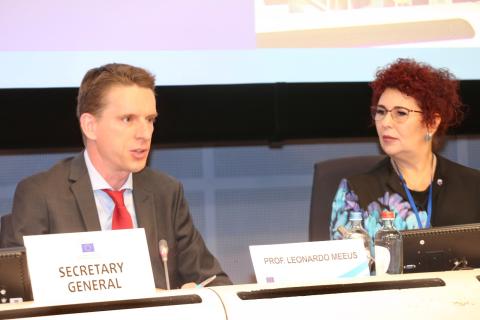
Ar šādiem vārdiem EESK priekšsēdētāja Christa Schweng atklāja 2022. gada 26. oktobra plenārsesijas debates par ES enerģētikas pārkārtošanu un stratēģisko autonomiju. EESK viesis bija Florences Eiropas Universtātes institūta profesors Leonardo Meeus.
“Mums jāstrādā pie zaļās pārkārtošanās tādā tempā, kādam uzņēmumi un sabiedrība spēj tikt līdzi, un jāīsteno papildu pasākumi, kas ļaus saglabāt Eiropas globālo konkurētspēju un veicinās inovāciju,” sacīja C. Schweng. “Eiropas Savienībai piemīt potenciāls samazināt atkarību no enerģijas importa, attīstot vietējo atjaunīgo energoresursu jaudu, taču jānodrošina pienācīgi ieguldījumu stimuli.”
Profesors L. Meeus atsaucās uz Eiropas Komisijas ierosinātajām ES elektroenerģijas tirgus reformām un norādīja, ka pašreizējais elektroenerģijas tirgus, ko esam izveidojuši pēdējo 20 gadu laikā, var būt mūsu nākotnes daļa tikai tad, ja mēs to papildināsim un apvienosim ar jauniem patērētāju iesaistīšanas un tīklu modernizācijas instrumentiem.
Debates bija saistītas ar EESK atzinuma “Stratēģisks redzējums par enerģētikas pārkārtošanu Eiropas Savienības stratēģiskās autonomijas nodrošināšanai” pieņemšanu. Atzinumu izstrādājuši Thomas Kattnig, Lutz Ribbe un Tomasz Andrzej Wróblewski.
Atzinumā izklāstīts EESK skatījums uz enerģētikas pārkārtošanu un tās lomu virzībā uz ES stratēģisko autonomiju, un tas koncentrēts uz dekarbonizācijas paātrināšanu, atkarības samazināšanu no enerģijas importa, kopienu un uzņēmumu līdzatbildības palielināšanu un uz atbalstu neaizsargātajām mājsaimniecībām. (mp)