
European Economic
and Social Committee
ES institucijos turi nedelsdamos užmegzti struktūruotą pilietinį dialogą ir laikytis ES sutarties 11 straipsnio
Parengė EESRK Pilietinės visuomenės organizacijų grupė
Sausio 24 d. Europos pilietinės visuomenės atstovai nusiuntė atvirą laišką Europos Komisijos ir Europos Parlamento pirmininkams ir Europos Sąjungos Tarybai pirmininkaujančiai Belgijai. Laišką pasirašiusios šalys paragino tris pagrindines ES sprendimų priėmimo procese dalyvaujančias Europos Sąjungos (ES) institucijas imtis konkrečių priemonių siekiant užmegzti atvirą, skaidrų ir nuolatinį dialogą su pilietinės visuomenės organizacijomis, kaip nustatyta Europos Sąjungos sutarties 11 straipsnyje, visose politikos srityse.
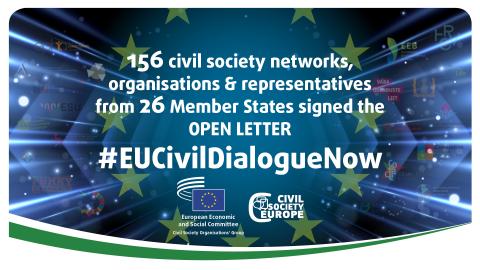
Atvirą laišką inicijavo EESRK Pilietinės visuomenės organizacijų grupė ir Europos pilietinės visuomenės tinklas, jame pateikiami konkretūs pasiūlymai dėl tokio dialogo užmezgimo. Savo paramą išreiškė 156-ios laišką pasirašiusios šalys iš 26 valstybių narių. Tarp pasirašiusiųjų yra 39 Europos tinklai, 85 nacionalinės organizacijos ir 60 EESRK Pilietinės visuomenės organizacijų grupės narių.
Nepaisant teisinių nuostatų, pilietinis dialogas ES institucijose tebėra fragmentiškas ir nestruktūruotas. Todėl atvirą laišką #EUCivilDialogueNow pasirašiusios šalys ragina ES institucijas:
- inicijuoti tarpinstitucinį susitarimą dėl pilietinio dialogo,
- kiekvienoje institucijoje sukurti vadovaujamas pareigas, kurias einantis asmuo būtų atsakingas už santykius su pilietine visuomene,
- skatinti ir propaguoti glaudesnį bendradarbiavimą su pilietinės visuomenės ir socialiniais subjektais.
Šios pastangos turi būti grindžiamos Konferencijos dėl Europos ateities rekomendacijomis. Pirmiausia signatarai pasiūlė Europos Komisijai pateikti komunikatą dėl pilietinio dialogo stiprinimo ES lygmeniu.
Atviras laiškas 24 kalbomis pateikiamas: https://www.eesc.europa.eu/lt/agenda/our-events/events/eu-civil-dialogue-now/open-letter.
Daugiau informacijos pateikiama pranešime spaudai, kuriame skelbiama apie atvirą laišką 24 kalbomis: https://www.eesc.europa.eu/lt/agenda/our-events/events/eu-civil-dialogue-now.