
European Economic
and Social Committee
Le istituzioni dell'UE devono attuare con urgenza un dialogo civile strutturato e conformarsi all'articolo 11 del Trattato UE
A cura del gruppo Organizzazioni della società civile del CESE
Lo scorso 24 gennaio la società civile europea ha inviato una lettera aperta alle Presidenti della Commissione europea e del Parlamento europeo, nonché alla presidenza belga del Consiglio dell'Unione europea. I firmatari della lettera hanno esortato le tre principali istituzioni dell'Unione europea (UE) coinvolte nel processo decisionale dell'UE ad adottare misure concrete per attuare un dialogo franco, trasparente e costante con le organizzazioni della società civile, come previsto dall'articolo 11 del Trattato sull'Unione europea, in tutti i settori d'intervento.
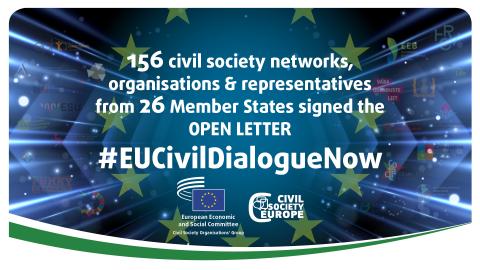
La lettera aperta è stata redatta su iniziativa del gruppo Organizzazioni della società civile del CESE e di Civil Society Europe, e contiene proposte specifiche per l'attuazione. La lettera ha ottenuto il sostegno di un totale di 156 firmatari, provenienti da 26 Stati membri, tra cui figurano 39 reti europee, 85 organizzazioni nazionali e 60 membri del gruppo Organizzazioni della società civile del CESE.
Nonostante le disposizioni giuridiche, il dialogo civile rimane frammentario e non strutturato tra le istituzioni dell'UE. Per questo motivo i firmatari della lettera aperta #EUCivilDialogueNow invitano le istituzioni dell'UE a:
- dare vita a un accordo interistituzionale sul dialogo civile;
- istituire, all'interno di ciascuna istituzione, posti di dirigenti responsabili dei rapporti con la società civile;
- stimolare e promuovere una maggiore cooperazione tra gli attori civici e sociali.
Questi sforzi devono dare seguito alle raccomandazioni della Conferenza sul futuro dell'Europa. Come primo passo, i firmatari hanno proposto una comunicazione della Commissione europea sul rafforzamento del dialogo civile al livello dell'UE.
La lettera aperta è disponibile in 24 lingue all'indirizzo: https://www.eesc.europa.eu/it/agenda/our-events/events/eu-civil-dialogue-now/open-letter.
Maggiori informazioni sono disponibili nel comunicato stampa che annuncia l'invio della lettera aperta, disponibile in 24 lingue all'indirizzo: https://www.eesc.europa.eu/it/agenda/our-events/events/eu-civil-dialogue-now.