
European Economic
and Social Committee
EU:n toimielinten on noudatettava Euroopan unionista tehdyn sopimuksen 11 artiklaa ja tehtävä jäsennellystä kansalaisvuoropuhelusta kiireellisesti totta
Kansalaisyhteiskunnan organisaatiot -ryhmä
Euroopan kansalaisyhteiskunta lähetti 24. tammikuuta avoimen kirjeen Euroopan komission puheenjohtajalle, Euroopan parlamentin puhemiehelle ja Euroopan unionin neuvoston puheenjohtajavaltiolle Belgialle. Allekirjoittajat kehottavat Euroopan unionin kolmea tärkeintä päätöksentekoelintä toteuttamaan konkreettisia toimenpiteitä avoimen ja säännöllisen vuoropuhelun käymiseksi kansalaisyhteiskunnan organisaatioiden kanssa kaikilla politiikanaloilla Euroopan unionista tehdyn sopimuksen 11 artiklan mukaisesti.
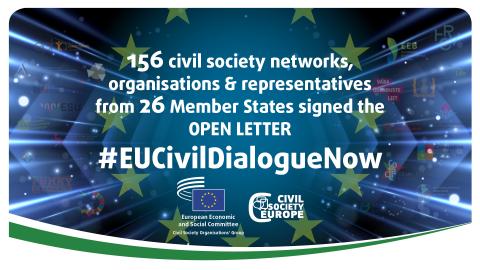
Aloitteen avoimesta kirjeestä tekivät ETSK:n kansalaisyhteiskunnan organisaatiot -ryhmä ja Civil Society Europe -järjestö, ja siinä esitetään konkreettisia ehdotuksia vuoropuhelun toteuttamiseksi. Kirje sai tukea yhteensä 156 allekirjoittajalta 26 jäsenvaltiosta. Allekirjoittajien joukossa on 39 eurooppalaista verkostoa, 85 kansallista organisaatiota ja 60 kansalaisyhteiskunnan organisaatiot -ryhmän jäsentä.
Kansalaisvuoropuhelu on lainsäädännöstä huolimatta edelleen hajanaista ja jäsentymätöntä kaikissa EU:n toimielimissä. Avoimen kirjeen #EUCivilDialogueNow allekirjoittajat kehottavatkin EU:n toimielimiä
- tekemään toimielinten välisen sopimuksen kansalaisvuoropuhelusta
- perustamaan kuhunkin toimielimeen kansalaisyhteiskuntasuhteista vastaavien johtohenkilöiden toimia
- kannustamaan kansalaistoimijoita ja yhteiskuntaelämän toimijoita yhteistyöhön sekä edistämään tätä yhteistyötä.
Toteutettavien toimien tulee pohjautua Euroopan tulevaisuuskonferenssin suosituksiin. Allekirjoittajat ehdottavat, että Euroopan komissio antaisi aluksi tiedonannon kansalaisvuoropuhelun vahvistamisesta EU:n tasolla.
Avoin kirje on saatavilla 24 kielellä osoitteessa https://www.eesc.europa.eu/fi/agenda/our-events/events/eu-civil-dialogue-now/open-letter.
Lisätietoa saa aihetta käsittelevästä lehdistötiedotteesta, joka on julkaistu 24 kielellä osoitteessa https://www.eesc.europa.eu/fi/agenda/our-events/events/eu-civil-dialogue-now.