believes it is crucial to include persons with disabilities throughout the process of designing, developing, assessing and implementing new technologies and AI-based applications. This involvement is key to mitigating potential discriminatory risks;
invites the Member States and the EU to audit and evaluate to what extent AI applications are inclusive in critical fields;
believes further follow-up is required to protect persons with disabilities from the harmful application of supposedly limited risk systems, particularly in the field of employment and recruitment;
underlines the importance of ensuring the general accessibility of services and goods that apply new technologies and AI based solutions
Despite progress in gender equality, millions of women across Europe still face violence, discrimination and barriers to equal opportunities. From under-representation in leadership to the alarming rise in gender-based violence, urgent action is needed. The European Economic and Social Committee (EESC) High-Level Forum on Women’s Rights brought together leading voices to address these pressing issues and outline key priorities ahead of the upcoming UN Commission on the Status of Women session.
Partnership event by the EAPN and the Civil Society Organisations' Group
Event type
Conference
Location
Rue Van Maerlant 2
Brussels
Belgium
The European Anti-Poverty Network (EAPN) launched its latest Poverty Watch Report at an event co-organised by the EAPN and the EESC Civil Society Organisations' Group. The 2024 Poverty Watch Report is available on the EAPN website.
In its own-initiative opinion on the new European Pillar of Social Rights (EPSR) Action Plan, the European Economic and Social Committee (EESC) welcomes the European Commission’s initiative and urges a renewed and ambitious approach. The EESC highlights the need to reinforce the social dimension of the EU, particularly in light of ongoing green and digital transitions and persistent inequalities. It calls for a stronger focus on social investment, quality employment, inclusive labour markets, fair mobility and accessible social protection systems. The Committee underlines the importance of involving civil society and social partners at all levels and recommends establishing clear targets, effective monitoring and adequate funding to ensure the full implementation of the EPSR principles.
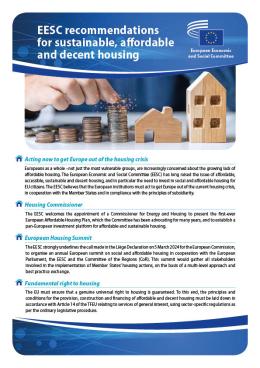
Europeans as a whole – not just the most vulnerable groups, are increasingly concerned about the growing lack of affordable housing. The European Economic and Social Committee (EESC) has long raised the issue of affordable, accessible, sustainable and decent housing, and in particular the need to invest in social and affordable housing for EU citizens. The EESC believes that the European institutions must act to get Europe out of the current housing crisis, in cooperation with the Member States and in compliance with the principles of subsidiarity.
This study aims to uncover why some countries in the EU have low or very low levels of collective bargaining coverage and propose policy recommendations to promote collective bargaining effectively.
An initiative of the Civil Society Organisations’ Group in cooperation with Friends of the Earth Europe
-
Location
EESC headquarters, JDE building, Rue Belliard/Belliardstraat 99-101
Brussels
Belgium
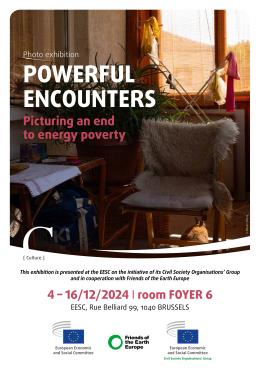
The European Economic and Social Committee (EESC) presented the photo exhibition ‘Powerful Encounters: Picturing an end to energy poverty’ on the initiative of its Civil Society Organisations’ Group and in cooperation with Friends of the Earth Europe. The work of photographer Miriam Strong was exhibited from 4 to 16 December 2024 at the EESC’s premises in Brussels.