
European Economic
and Social Committee
On the first EU "organic day", the EESC stresses the importance of more sustainable, fairer and more inclusive food systems
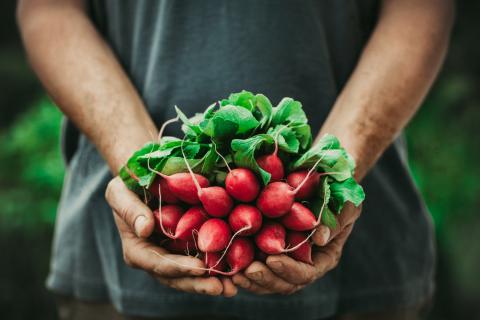
With Europe slowly getting back on track after the COVID-19 crisis, it is high time to move from words to action and implement the Farm to Fork strategy. The European Economic and Social Committee (EESC) strongly advocates supporting the transformation of Europe's food systems so that they are more environmentally, economically and socially sustainable, and notes that consumers have a key role to play in this context. It also stresses that cooperation (rather than competition) among food chain operators is essential to foster a more resilient and inclusive food system, ensuring a fair share for all.
On 23 September 2021, the European Union will celebrate its first "organic day" and the UN Food Systems Summit will take place in New York. The EESC has just adopted opinions on the Action Plan for the development of EU organic production and Towards a Fair Food Supply Chain.
Many more great opportunities are coming up for decision-makers to bring about the transformations needed, including the UN climate conference (COP26), the UN Biodiversity Conference (COP15), and the Committee on World Food Security (CFS 49). We are at a critical point for implementing a comprehensive food policy.
25% of agricultural land for organic farming in the EU: an ambitious target
As part of the European Green Deal, the European Commission has set a target under the Farm to Fork Strategy and the Biodiversity Strategy for organic production in the EU: at least 25% of agricultural land is to be farmed organically by 2030. On 25 March 2021, the European Commission published an Organic Action Plan to support Member States in reaching that target.
Organic farming has a role to play in achieving the objectives of the European Green Deal. A market-oriented approach to further increase consumer demand and confidence in organic products will be the key. It is up to each of us to strengthen sustainable production methods by making more sustainable consumption decisions in our everyday life
, said Andreas Thurner, rapporteur for the EESC opinion on Organic Production.
The EESC sees the action plan for the development of organic production as a solid basis for sustainable expansion of the sector towards the very ambitious 25% target.
Raising awareness of organic production, promoting exchanges of experience between Member States and farmers, drawing up national/regional organic action plans, and using the opportunities available under the common agricultural policy (CAP) are some of the recommendations for achieving this target. Holding an EU "organic day" is very much welcome in this context.
The EESC nevertheless stresses the need for sufficient financial resources to ensure that the benefits of this significant conversion to organic farming are enjoyed by all EU citizens. With organic products usually costing more than non-organic products, the EESC calls for measures to be put in place to ensure that those products are accessible to socially vulnerable groups and that public procurement ensures more use of regional organic food products (e.g. in canteens). The EESC also points out that shorter and local organic production and marketing chains that take account of seasonality could be a promising way of generating more added value along the food chain while providing employment opportunities in rural areas.
Fostering more inclusive and fairer sustainable food systems for a well-being economy post COVID-19
The EU must focus on correcting the distortions currently disrupting food and agricultural markets, and on transforming the way it produces, consumes and thinks about food. Europe and the world must improve the functioning of food systems, if we are to achieve the Sustainable Development Goals by 2030.
The imbalances of economic and bargaining power in EU (but also global) food systems put pressure on weaker operators and workers. More sustainable, fairer and inclusive food systems are essential if we want to achieve a well-being economy that works for people and the planet, leaving no one behind
, said Peter Schmidt, co-rapporteur for the EESC opinion on a fair food supply chain and president of the EESC Section for Agriculture, Rural Development and the Environment.
Requested by the Slovenian Presidency of the EU, the EESC exploratory opinion on Towards a Fair Food Supply Chain thus welcomes the Commission's decision to draw up rules on unfair trading practices (UTPs) in the agricultural and food supply chain as a step forward in addressing power imbalances along the chain.
The opinion highlights the fact that Member States are already going beyond minimum requirements and addressing issues such as buying below production cost, double-race auctions, or protecting all actors in the supply chain regardless of their size or their position in the food chain. The EESC therefore urges Member States to transpose and implement this Directive with ambitious laws as soon as possible.
Farmers have been taking a smaller and ever-shrinking percentage of the final price over time. They should finally be paid a fair and just price! Member States should tackle UTPs with ambitious laws, ensuring that farmers receive an income that is adequate for investment, innovation and sustainable production
, concluded Branko Ravnik, rapporteur for the EESC Food Supply Chain opinion.
Work organisation
Downloads
-
On the first EU "organic day", the EESC stresses the importance of more sustainable, fairer and more inclusive food systems
Recommended for you
Η εργαλειοποίηση των μεταναστών και η προσφυγική κρίση της Ουκρανίας επιβάλλουν ένα νέο ξεκίνημα για τη μεταναστευτική πολιτική
News
Η κρατική εργαλειοποίηση των μεταναστών, που αποσκοπεί στην αποσταθεροποίηση της ΕΕ, και ο τρέχων πόλεμος στην Ουκρανία, που οδηγεί σε πρωτόγνωρη εισροή προσφύγων, επιβάλλουν την επανεξέταση της…
YEYS! 2023: Οι νέοι ζητούν μια πιο διαφανή, ψηφιακή και απλοποιημένη ΕΕ
News
Στις 23 και 24 Μαρτίου, η Ευρωπαϊκή Οικονομική και Κοινωνική Επιτροπή (ΕΟΚΕ) φιλοξένησε την 14η διοργάνωση της εκδήλωσης «Η δική σου Ευρώπη, η δική σου φωνή!» (YEYS!), η οποία προσέλκυσε στις…
Η ΕΕ χρειάζεται αποτελεσματικότερη πολυμέρεια για την αντιμετώπιση των κινδύνων που σχετίζονται με την ασφάλεια στη θάλασσα, επισημαίνει η ΕΟΚΕ
News
Η Ευρωπαϊκή Οικονομική και Κοινωνική Επιτροπή (ΕΟΚΕ) ζητεί περισσότερες κοινές δράσεις σχετικά με τη στρατηγική της ΕΕ για την ασφάλεια στη θάλασσα και το σχετικό σχέδιο δράσης, που αποσκοπούν στη…
Η ΕΟΚΕ δρομολογεί τη διαδικασία υποβολής υποψηφιοτήτων για το Βραβείο της Κοινωνίας των Πολιτών, το οποίο θα αφορά την ψυχική υγεία
News
Οι οργανώσεις της κοινωνίας των πολιτών, οι ιδιώτες και οι ιδιωτικές εταιρείες μπορούν τώρα να υποβάλουν τα μη κερδοσκοπικά έργα τους για το βραβείο της ΕΟΚΕ που είναι αφιερωμένο στη στήριξη της…
#ReskillEU — Το εργατικό δυναμικό της Ευρώπης στους τομείς της ενέργειας και των μεταφορών χρειάζεται νέες δεξιότητες για να κάνει πραγματικότητα την απανθρακοποίηση
News
Για να επιτύχει η απανθρακοποίηση των τομέων της ενέργειας και των μεταφορών της ΕΕ, οι εν λόγω τομείς χρειάζονται εργαζομένους εξοπλισμένους με «νέες» δεξιότητες, προειδοποιεί η Ευρωπαϊκή Οικονομική…