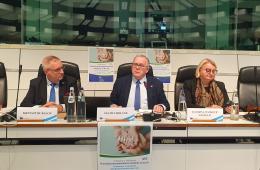
The EESC adopted this opinion after in-depth work carried out during the four meetings of the study group. The opinion also reflects the national debates with civil society organisations carried out in all Member States between 2 September and 2 November 2016. These discussions were coordinated by three members of the EESC ('trios') from the country concerned, often in cooperation with the European Commission (15 debates) or the national economic and social council (7 debates). Participants came from a wide range of employers' and trade union organisations and other civil society organisations, as well as, to a lesser extent, from the academic world. A total of 116 EESC members and nearly 1,800 representatives of civil society organisations participated in the 28 debates. The conclusions/recommendations of the national debates have been grouped in the opinion, while the reports on the national debates will be published separately.
Relevant Eurofound publications, non-exhaustive chronological list
This exploratory opinion responds to a request made by the Polish Presidency. One of the key messages is that the number of high quality jobs needs to be increased. If we succeed to use the untapped employment reserves in all age brackets, many other issues - for instance the long term funding of the pension systems - will be solved. If the real retirement age is to be raised then it is necessary to ensure that people can work longer. The opinion lists a package of measures to make working conditions favourable for older people.
Download — EESC opinion: Demographic trends and the labour market
Across a wide range of issues, including employment, pension systems, climate change, health and care services, and political participation, both younger and older generations feel inadequately represented in the current policy responses. This is contributing to growing political disillusionment and jeopardising the cohesion of European societies.
Some 42% of Europe's older population report that age discrimination is prevalent in their country, with ageism peaking in the workplace. As the proportion of people over 65 is set to steadily rise in the coming decades, the EU is in dire need of a comprehensive strategy which will allow for a fundamental change, both in policies and in society's perception of older people
In a plenary debate with Commission Vice President Dubravka Šuica, the EESC asked the Commission to present a new strategy for older persons before the end of the current mandate
The debate of the EESC on “Strong regions for a safe Europe:Resilience and growth of EU Eastern border regions” will focus on the strategic importance of strengthening resilience and fostering sustainable growth in the European Union’s eastern border regions.
This public hearing will aim to present and discuss the European Commission’s Strategy on Intergenerational Fariness, a new strategic framework to guarantee that current decisions are made with the future in mind, ensuring a fair balance of benefits and burdens across all generations. The event will gather key institutional actors, civil society organisations, social partners and experts to reflect on the Strategy's priorities and to contribute to the preparation of the EESC Opinion (SOC/868).
The event will be webstreamed (EN, original). No registration is needed and participation is free of charge.
Follow us on X: @EESC_SOC
Ask your questions to the panelists via Sli.do with the event code: #IntergenStrategy
"Cohesion policy 2028–2034: A new fund, a new framework, a new role for civil society?" brings together EU institutions, social partners and civil society representatives to reflect on the future of cohesion policy in the next Multiannual Financial Framework. The hearing explores proposals for reforming cohesion funding and governance, assesses the implications of the new framework through the National and Regional Partnership Plans and examines how civil society organisations can play a stronger role in the design, implementation and monitoring of cohesion policy. The discussion aims to identify how cohesion policy can continue to deliver territorial, social and economic cohesion while responding to new challenges and transitions facing the European Union.
The legislative package proposed by the European Commission are likely to affect the availability of financial instruments for EU citizens, the returns of their savings and national policies on supplementary pensions. This event will gather institutions and civil society stakeholders.