
European Economic
and Social Committee
För att återhämtningen ska lyckas måste det europeiska civila samhället involveras systematiskt
EESK har antagit en ny resolution om det organiserade civila samhällets deltagande i genomförandet och övervakningen av de nationella planerna för återhämtning och resiliens. Ett nyligen genomfört samråd visar att det organiserade civila samhället i strid med lagstiftningen inte är tillräckligt involverat i dessa planer.
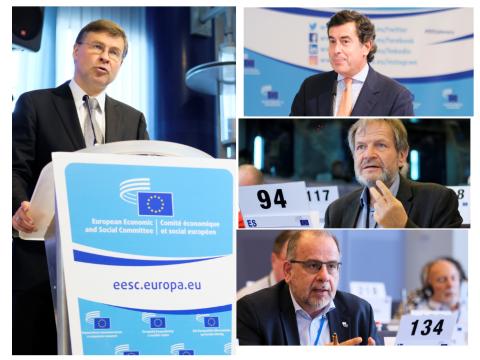
Kommittén efterlyser tydliga regler för att effektivt åtgärda detta och få ekonomin på fötter igen. Under den debatt som hölls i samband med antagandet påpekade EESK:s ordförande Christa Schweng att för att man ska kunna förbättra kvaliteten på, insynen i och genomförandet av ny politik är det nödvändigt att det organiserade civila samhället får delta i de reformer som fastställs i de nationella planerna för återhämtning och resiliens. Gonçalo Lobo Xavier, vice ordförande för gruppen för den europeiska planeringsterminen, lyfte fram några av de viktigaste slutsatserna av samrådet.
”Det slutliga innehållet i de nationella planerna för återhämtning och resiliens bedöms har i allmänhet tagits emot positivt av det organiserade civila samhället. Den sociala dimensionen är dock ofta outvecklad”, betonade han. Javier Doz Orrit, ordförande för gruppen för den europeiska planeringsterminen, redogjorde för de viktigaste rekommendationerna. Han uppmanade också dels medlemsstaterna att ”se till att utan dröjsmål följa de regler som gäller för faciliteten för återhämtning och resiliens”, dels kommissionen och Europaparlamentet att övervaka efterlevnaden. Luca Jahier, vice ordförande för gruppen för den europeiska planeringsterminen, delade med sig av god praxis, och menade att det organiserade civila samhället inte kommer att kunna delta i EU:s ekonomiska styrning på ett verkningsfullt och ett högkvalitativt sätt förrän man har genomfört en reform av den europeiska planeringsterminen.
Valdis Dombrovskis, verkställande vice ordförande för kommissionen, som även han deltog i debatten, belyste konsekvenserna av Rysslands invasion i Ukraina för den ekonomiska återhämtningen globalt och för EU, och vad som krävs för att avhjälpa dem och gå vidare. (tk)