
European Economic
and Social Committee
I piani per la ripresa avranno successo solo con un coinvolgimento sistematico della società civile europea
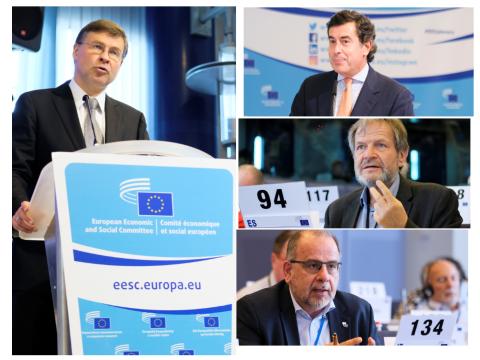
Il CESE ha adottato una nuova risoluzione sul coinvolgimento della società civile organizzata nell'attuazione e nel monitoraggio dei piani nazionali per la ripresa e la resilienza (PNRR). Da una recente consultazione emerge che, contrariamente a quanto previsto dalla regolamentazione, la società civile organizzata non è sufficientemente coinvolta in questi piani.
Il Comitato chiede regole chiare per porre rimedio in modo efficace a tale situazione e riportare l'economia sulla buona strada. Nel dibattito sull'adozione del parere, la Presidente del CESE Christa Schweng ha sottolineato che "coinvolgere la società civile organizzata nelle riforme stabilite nei PNRR è indispensabile per migliorare la qualità, la trasparenza e l'attuazione delle nuove politiche." Gonçalo Lobo Xavier, vicepresidente del gruppo Semestre europeo (GSE), ha esposto alcuni dei principali risultati della consultazione, sottolineando che
"in linea generale, il contenuto finale dei PNRR è valutato positivamente dalla società civile organizzata. In questi piani, tuttavia, la dimensione sociale è spesso poco sviluppata". Javier Doz Orrit, presidente del GSE, ha presentato le principali raccomandazioni. Ha inoltre invitato gli Stati membri "a conformarsi con urgenza alle norme stabilite nel dispositivo per la ripresa e la resilienza" e ha chiesto alla Commissione europea e al Parlamento di garantire tale rispetto. Luca Jahier, vicepresidente del GSE, ha illustrato alcune buone pratiche e dichiarato che "la mancanza di una partecipazione efficace e di qualità della società civile organizzata alla governance economica dell'UE non sarà risolta in modo soddisfacente fino a quando non vi sarà una riforma del semestre europeo".
Al dibattito ha partecipato anche Valdis Dombrovskis, vicepresidente esecutivo della Commissione europea, il quale ha sottolineato l'impatto dell'invasione russa dell'Ucraina sulla ripresa economica mondiale e sull'UE, e le misure da adottare per assorbire questo shock e andare avanti. (tk)