European Economic
and Social Committee
European Economic
and Social Committee
The European Economic and Social Committee (EESC) is the voice of organised civil society in Europe.
Find out more about its role and structure at http://www.eesc.europa.eu/en/about
The EESC issues between 160 and 190 opinions, evaluation and information reports a year.
It also organises several annual initiatives and events with a focus on civil society and citizens’ participation such as the Civil Society Prize, the Civil Society Days, the Your Europe, Your Say youth plenary and the ECI Day.
Find the latest EESC opinions and publications at http://www.eesc.europa.eu/en/our-work/opinions-information-reports/opinions and http://www.eesc.europa.eu/en/our-work/publications-other-work/publications respectively.
The EESC is active in a wide range of areas, from social affairs to economy, energy and sustainability.
Learn more about our policy areas and policy highlights at http://www.eesc.europa.eu/en/policies
The EESC holds nine plenary sessions per year. It also organises many conferences, public hearings and high-level debates related to its work.
Find out more about our upcoming events at http://www.eesc.europa.eu/en/agenda/our-events/upcoming-events
Here you can find news and information about the EESC'swork, including its social media accounts, the EESC Info newsletter, photo galleries and videos.
Read the latest EESC news http://www.eesc.europa.eu/en/news-media/news and press releases http://www.eesc.europa.eu/en/news-media/press-releases
The EESC brings together representatives from all areas of organised civil society, who give their independent advice on EU policies and legislation. The EESC's326 Members are organised into three groups: Employers, Workers and Various Interests.
Find out more about our Members and groups at http://www.eesc.europa.eu/en/members-groups
The EESC has six sections, specialising in concrete topics of relevance to the citizens of the European Union, ranging from social to economic affairs, energy, environment, external relations or the internal market.
Find out more at http://www.eesc.europa.eu/en/sections-other-bodies
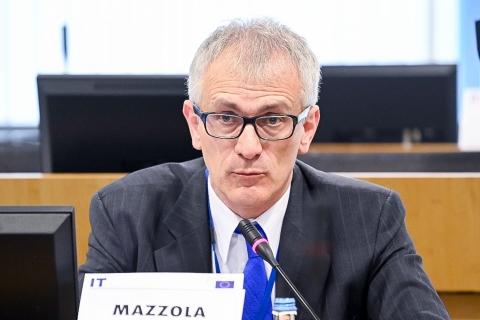
Neustále zmeny domácich politických priorít jednotlivých členských štátov EÚ sú zásadnou prekážkou včasnej realizácie projektov transeurópskej dopravnej siete (TEN-T), čo vyvoláva pochybnosti o tom, či bude základnú sieť možné dokončiť do roku 2030. Upozorňuje sa na to v informačnej správe Alberta Mazzolu s názvom Hodnotenie usmernení pre transeurópsku dopravnú sieť (TEN-T) na roky 2013 – 2020, ktorá bola prijatá na júlovom plenárnom zasadnutí EHSV.
Medzi hlavné prekážky dokončenia projektu TEN-T nepatria iba zmeny národných politických priorít, ktoré vplývajú hlavne na projekty s cezhraničným významom, ale aj odpor občanov a iných zainteresovaných strán. Poukazuje to na významné sociálne a ekonomické problémy súvisiace s politikou TEN-T, takže sa musíme zaoberať potrebami občianskej spoločnosti, lebo iba vďaka včasnému zapojeniu a konzultáciám s jej organizáciami sa môžu urobiť ďalšie opatrenia a odstrániť prekážky realizácie projektov.
Počas diskusie v pléne pán Mazzola uviedol, že „rovnako ako akcionári, aj členovia výboru majú pochybnosti, či bude základnú sieť možné dokončiť do roku 2030, ale považujú tento cieľ za dôležitý, aby členské štáty boli motivované vyvinúť väčšie úsilie, a veria, že by dovtedy mohlo byť dokončených niekoľko veľkých cezhraničných projektov. Účasť občianskej spoločnosti a monitorovanie koridoru a prípravy projektov majú zásadný význam, pokiaľ ide o ich realizáciu najvhodnejším spôsobom. Pomerne dobre sa napreduje s tými projektmi, pri ktorých sa to zabezpečilo už v ranom štádiu a ľudia boli dostatočne informovaní. Pri iných projektoch dochádza k veľkému odporu časti obyvateľstva.“ (mp)