The Global Gateway initiative aims to secure the EU's open strategic autonomy, but must be based on impact assessments, as underlined by the European Economic and Social Committee in its opinion adopted at its December plenary. The EESC proposes to play a more active role in the key stages of the decision-making process for development projects associated with the Global Gateway.
In an opinion adopted at its plenary session, the European Economic and Social Committee (EESC) has proposed a strategy to address socio-economic challenges facing the EU's islands, mountainous regions, and sparsely populated areas. The EESC is calling for EU action to be taken through cohesion policy, emphasising the need for tailored strategies, reliable data, and specific mechanisms for sustainable growth.
In the pursuit of a more competitive EU economy, the financial sector – and especially banking – emerges as the backbone, wielding substantial influence over both financing and pivotal transitions towards sustainability. In an opinion adopted in plenary, the European Economic and Social Committee (EESC) highlights key ways to fortify this sector and reinforce its contribution to the EU's strategic autonomy and transformative goals.
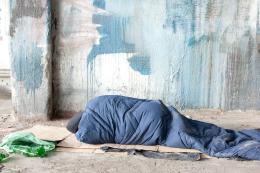
Almost 900 000 people experience street homelessness or stay in a shelter on any given night in the EU. With homelessness rising rapidly, the EESC calls upon Member States and the EU to take concrete action
In a visionary call for transformative change, the European Economic and Social Committee (EESC), at its latest plenary session, adoptedan own-initiative opinion emphasising the pivotal role of young people in shaping the sustainable future of rural areas across Europe.
In its capacity as the home of civil society, the EESC welcomed participants from several developing countries to the 2023 Civil Society Forum on Trade and Sustainable Development. Joined by high-level representatives from the EU, the ILO and UNCTAD, civil society speakers openly discussed existing policies and new initiatives, called for a truly inclusive approach and proposed concrete solutions to make trade a driving force for the Just Transition.
The EESC is calling for the scope of the Commission proposal for a European Disability Card to be expanded to cover longer stays for work and study, with the goal of fully achieving freedom of movement of persons with disabilities in the EU
The EU should promote climate diplomacy as a flagship policy in its external action, stressed the European Economic and Social Committee in its opinion adopted in the December plenary. A robust and credible strategic plan is needed to adjust its climate diplomacy to the current geopolitical landscape and the UN Sustainable Development Goals.
We welcome the provisional agreement on the Artificial Intelligence Act reached by EU lawmakers. The text enshrines into law several crucial recommendations we made in our opinion of September 2021, such as banning social scoring, irrespective of who performs it. As we stressed back then, there is no place in the EU for such practises.