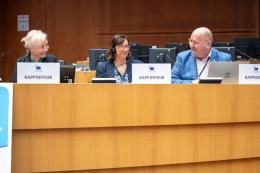
The negotiations on the EU 2040 climate target are currently in a deadlock. In today’s plenary, the European Economic and Social Committee (EESC) decided to back the proposed Climate Law Amendment, urging the EU Council and the Parliament to seal the 90% target before COP30 in Brazil, warning Europe risks losing credibility if it drags its feet.
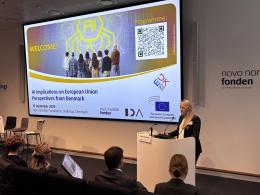
A conference held in Denmark by the European Economic and Social Committee (EESC) highlighted the vital role that artificial intelligence could play in offering new forward-looking solutions to treat rare diseases.
The EESC Section for Employment, Social Affairs and Citizenship (SOC) organised a hearing on "Accessible and Affordable Housing for All: Ensuring Inclusion of Persons with Disabilities in the EU". It brought together voices from the EU institutions, civil society, disability organisations and housing experts to address the urgent challenge of affordable and accessible housing across Europe.
The European Economic and Social Committee will host its End of Mandate Ceremony on 17 September 2025. This event will gather EU leaders, civil society, youth voices and international partners around the Committee’s achievements of the 2023-25 mandate of EESC President Oliver Röpke.
You will be able to follow the ceremony by web streaming
The European Economic and Social Committee (EESC) recently adopted an opinion welcoming the European Commission’s Industrial Action Plan, designed to help Europe’s automotive industry navigate a period of profound change. The ongoing shift towards cleaner and more digital vehicles must be carefully managed to protect jobs, support businesses, and ensure that no region or worker is left behind in the transition.
Civil society is urging the EU to put people, not just policies, at the heart of its new Ocean Pact. In a new position, the European Economic and Social Committee (EESC) calls for maritime strategies that protect biodiversity while ensuring fairness for coastal communities and industry competitiveness. It also stresses the need to align the Pact with broader EU goals like the Green Deal, SDGs, and Blue Economy Strategy, and to ensure coherence with related frameworks.
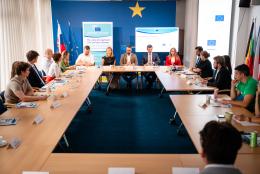
Introduced by the European Economic and Social Committee (EESC) in 2024, the Youth Test is now being recognised as a pioneering method for integrating youth voices into policy-making. A recent roundtable in Bratislava brought together young leaders, policymakers and civil society to examine how the Youth Test can be meaningfully integrated into national decision-making processes.
At its July plenary session, the European Economic and Social Committee (EESC) backed new EU proposals to strengthen Europe’s defence readiness, while underlining the need to preserve democratic values and promote a long-term strategy for peace.