
European Economic
and Social Committee
EESC to host debate on the housing crisis with Commissioner Dan Jørgensen at September plenary
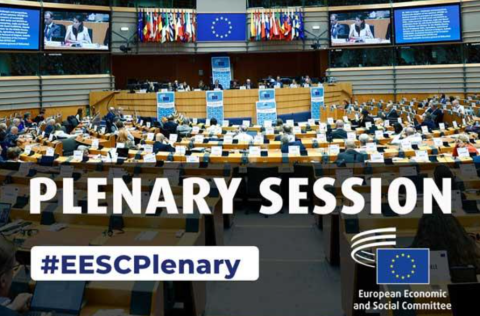
17-18 September 2025
European Parliament, Paul-Henri Spaak building (Hemicycle – PHSHEM), 1047 Brussels
Web stream click here
AGENDA
Debates
Wednesday 17 September 2025
2.30 p.m.
2023-2025 end-of-mandate ceremony
- Proud to be EESC: Opening together
- A Social Europe for a Competitive and Sustainable Future
- Opening Europe’s Future: Youth at the Heart of Democracy
- From Kyiv to Tirana: Civil Society Shaping Europe’s Future
- Parting Voices, Lasting Legacy
- Team EESC – Tribute from the Groups
- Mandate Milestones: Reflections from the Vice-Presidents
- From Vision to Delivery: The Administration’s Contribution
- Civil Society at the Heart of Europe’s Institutions
- Equality & Inclusion
- Global Gateway for Civil Society
- Statement by Oliver Röpke, EESC President – Final Address
Thursday 18 September 2025
10:00 a.m.
The state of play of the new Pact for the Mediterranean
with Stefano Sannino, Director-General of the European Commission's Directorate-General for the Middle East, North Africa and the Gulf (DG MENA) and Pablo Pastor, Anna Lindh Foundation youth representative and President of the Mediterranean Youth Council
linked to REX/606 - New pact for the Mediterranean
11:00 a.m.
European Preparedness Union Strategy
with Johan Berggren, State Secretary to the Minister for Civil Defence of Sweden (tbc), Charlotte Petri Gornitzka, Governor of Gotland County in Sweden (tbc), and Luigi D'Angelo, Head of the Emergencies Management Office of the Italian Civil Protection Department (tbc)
linked to SC/54 European Preparedness Union Strategy
3:00 p.m.
Water Resilience Strategy
with Pedro Arrojo-Agudo, UN Special Rapporteur on the rights to safe drinking water and sanitation, Pernille Weiss, Member of the Cabinet of Commissioner Roswall, former Member of the European Parliament (tbc), Thomas Bajada, Member of the European Parliament (tbc) and Antonio Decaro, Member of the European Parliament, President of the ENVI Committee (tbc)
linked to CCMI/223 - Initiative for water resilience and CCMI/247 - Water resilience and the twin transition: Industrial approaches addressing the relationship between water, digitalisation and decarbonisation
4:30 p.m.
Affordable Housing
with Dan Jørgensen, European Commissioner for Energy and Housing
linked to TEN/848 - For a European Affordable Housing Plan – the contribution of civil society
Opinions in the spotlight
HOUSING
For a European Affordable Housing Plan – the contribution of civil society (TEN/848, rapporteur: John Comer (IE-III), co-rapporteur: Thomas Kattnig (AT-II))
The EESC addresses the current cost of living crisis and the growing concern of many European citizens about the availability, affordability and sustainability of decent housing. The end goal of this opinion is to contribute to improve European people’s lives and help shape European housing policy. In this vein, the Committee welcomes the announcement of the first Affordable Housing Plan and calls on the Commission to enforce the fundamental right to housing, emphasising that this right must be formally enshrined in EU primary law. More
ENERGY
Citizens' Energy Package: citizens' engagement, energy communities and prosumerism (TEN/854, rapporteur: Corina Murafa Benga (RO-III))
The EESC has been expressing concerns for many years that the EU is not delivering properly on its intention to place Europeans at the heart of the energy system. Against this backdrop, the Committee welcomes the Citizens’ Energy Package initiative and urges the European Commission to single out potential obstacles to prosumerism or to the creation of energy communities while outlining the essential conditions to create an effective framework to support citizens’ engagement. More
INTERNAL MARKET
Call for fair competition with regard to 3rd country platforms (INT/1084, rapporteur: Antje Gerstein (DE-I))
The EESC notes with concern that the expansion of third-country e-commerce platforms such as Temu and Shein creates significant challenges regarding fair competition, consumer protection and regulatory compliance. It calls for the speedy implementation of the EU toolbox for safe and sustainable e-commerce and for a quick implementation of the EU customs reform. More
European start-ups and scale-ups (INT/1089, rapporteur: Mira-Maria Danisman (SV-I))
The EESC stresses that the success of start-ups and scale-ups depends on competitive access to resources and product markets and on a supporting regulatory and fiscal environment for innovation, investment and trade. It welcomes the Commission's strategyon the subject but underlines the need for additional efforts to promote entrepreneurship and business development more broadly, emphasizing the importance of a well-functioning EU single market. More
EXTERNAL RELATIONS
Boosting sustainable growth and quality jobs in Euromed: promoting entrepreneurship and tapping the potential of women and young people (REX/604, rapporteurs: Milena Angelova (BG-I), co-rapporteur: Ioannis Vardakastanis (GR-III))
The objective of this own-initiative EESC opinion is to highlight that promoting entrepreneurship and quality job creation in the Mediterranean region is essential to harness the potential of women and young people, foster inclusive economic growth, and strengthen regional partnerships. More
A new Pact for the Mediterranean (REX/606, rapporteur: Thomas Wagnsonner (AT-II), co-rapporteur: Lidija Pavić-Rogošić (HR-III))
In the opinion the EESC emphasises the need for all relevant social actors, social partners and CSOs from the EU and the partner countries to be involved in the New Pact on a structured and permanent basis. More
Blue Diplomacy and water cooperation – solutions to relieve the pressure of climate induced migration (REX/597, rapporteur: Milena Angelova (BG-I), co-rapporteur: Ioannis Vardakastanis (GR-III))
In this opinion, the EESC emphasises the need to strengthen legal protection for climate migrants by extending the Temporary Protection Directive to those fleeing climate-related disasters and calls for closer integration of environmental and migration policies within the EU. More
Social media and AI algorithms: ensuring the right to accurate information and the visibility of high-quality content across Europe, especially about Eastern and Central Europe (REX/601, rapporteur: Tatjana Babrauskienė (LT-II), co-rapporteur: Andris Gobiņš (LV-III))
This information report highlights the need for amendments to the Digital Services Act to enhance platform accountability, promote media literacy, ensure algorithmic transparency, and foster collaboration between EU institutions and tech platforms to support high-quality, fact-based content and address language stereotypes amplified by algorithms. More
ECONOMY
Review of the Securitisation Regulation (ECO/681, rapporteur: Petru Sorin Dandea (RO-II))
The EESC supports the Commission’s plans to revive the EU securitisation market to help finance green, digital and social transitions, while warning that prudential changes alone will not boost real-economy lending. The Committee calls for a balanced approach that safeguards financial stability and investor protection, ensures freed-up capital benefits households and SMEs, and strengthens supervision and transparency. More
Additional considerations on the euro area economic policy 2025 (ECO/673, rapporteur: Juraj Sipko (SK-III))
The EESC warns that the EU and euro area are losing ground in the global economy due to low growth, weak productivity and external shocks, despite low unemployment and a positive trade balance. The Committee calls for stronger investment in strategic industries, a more integrated single market, fiscal sustainability and fair mobility in the services sector. Urgent action is needed to boost competitiveness, simplify rules, and strengthen the EU’s role in global trade. More
Additional considerations on the way forward for the European Semester 2025 (ECO/674, rapporteur: Javier Doz Orrit (ES-II))
The EESC warns that weak growth, geopolitical risks and an investment deficit are undermining Europe’s competitiveness and resilience. While supporting the Semester priorities of competitiveness and defence, it regrets the absence of social cohesion as a central goal and calls for stronger investment through an expanded EU budget, financial instruments and a completed Banking and Capital Markets Union. The Committee also urges permanent involvement of social partners and civil society in shaping the European Semester. More
ENVIRONMENT
Healthy planet for healthy people: towards a comprehensive ‘One Health’ approach (NAT/947, rapporteur: Nicoletta Merlo (IT-II), co-rapporteur: Arnaud Schwartz (FR-III))
The climate, biodiversity, pollution and pandemic crises prove our health is inseparable from that of animals and ecosystems. The EU needs a bold One Health strategy to prevent new diseases and protect people, nature and food systems. This holistic approach delivers double wins: healthier diets, safer environments, stronger economies. The own initiative report of the EESC is pushing for a new EU vision that links resilient ecosystems with shared prosperity More
Future of organic and quality foods and how we can step up consumption (NAT/949, rapporteur: Decebal-Ștefăniță Padure (RO-I), co-rapporteur: Kerli Ats (ES-III))
Initiated by the EESC, this opinion demands a cross-cutting EU food policy linking farming, health, climate and rural development. It urges VAT cuts, public procurement, and innovation to boost access to sustainable, high-quality products. Stronger controls, digital traceability and harmonised standards are key to fair, transparent markets. An EU strategy with clear targets, fair labels and global protection can drive a resilient, sustainable food system. More
European Climate Law amendment (NAT/952, rapporteur: Teppo Säkkinen (FI-I))
The EESC backs the EU’s 2040 Climate Law target to cut net emissions by 90% and urges swift adoption by Council and Parliament in 2025. Using the Youth Test, this opinion ensures the next generation’s perspective is central to shaping a just and ambitious transition. It calls for strong enabling policies to keep industries competitive, prevent misuse of international credits, and integrate food security into climate action. The EESC also pushes for clean tech exports, a Clean Industrial Scoreboard, and innovation that drives both resilience and climate goals. More
BLUE DEAL - TWO YEARS ON
Initiative for water resilience (CCMI/223, rapporteur: András Edelényi (HU-I), co-rapporteur: Guido Nelissen (BE-I))
The EESC, building on its earlier #EUBlue Deal, welcomes the Commission’s Water Resilience Strategy of June 2025 but calls for more comprehensive action to restore the water cycle, guaranteed access to clean water, modernised infrastructure, and reduced water use across sectors. More
INDUSTRY
EU Steel and Metals Action Plan (CCMI/245, rapporteur: Anastasis Yiapanis (CY-III), co-rapporteur: Michal Pintér (SK-I))
The EESC calls for urgent measures to restore competitiveness, protect jobs and drive decarbonisation. It recommends new trade defences, stricter traceability rules, recognition of scrap as a strategic raw material, energy market reform, hydrogen prioritisation, and stronger financial and social support to secure the sector’s sustainable future. More
Building blocks for strengthening Europe’s manufacturing base in cleantech (CCMI/241, rapporteur: Corina Murafa Benga (RO-III), co-rapporteur: Guido Nelissen (BE-I))
The EESC, concerned by Europe’s eroding cleantech base and growing competition from China and the US, calls for a strong industrial policy to secure decarbonisation, competitiveness and resilience. It proposes to stabilise demand, cut energy costs, boost financing, harmonise rules, develop skills and reduce strategic dependencies. More
HEALTH
Health and Safety at the Workplace – Zero Deaths EU Goal (SOC/832, rapporteur: Nicoletta Merlo (IT-II))
The EESC calls for a comprehensive, inclusive EU Occupational Safety and Health Strategy to achieve the Zero Deaths goal. It advocates universal protection for all workers, regardless of employment status, and recommends targeted approaches tailored to sectoral risks. The opinion stresses the importance of robust governance, social dialogue, and cooperation among stakeholders. It highlights the need for inclusive training, gender-sensitive practices, and adaptation to demographic and technological changes. More
AI, Big Data and Rare Diseases (SOC/834, rapporteur: Juliane Marie Neiiendam (DK-III))
The EESC supports the transformative potential of AI and Big Data in improving rare disease diagnosis, treatment, and patient care. It calls for ethical, inclusive, and transparent use of health data, with strong safeguards for privacy, gender equality, and patient rights. The opinion recommends digitising health systems, promoting AI literacy, and ensuring human oversight in medical decisions. It urges targeted funding for SMEs, gender-balanced datasets, and fair access to AI-driven healthcare innovations. More
DEMOCRACY
The European Democracy Shield (SOC/835, rapporteurs: Christian Moos (DE-III), José Antonio Moreno Díaz (ES-II))
The EESC calls for a comprehensive EU strategy to defend and strengthen democracy, the rule of law, and fundamental rights against internal and external threats. It urges robust enforcement of existing regulations, enhanced support for civil society, and resilient digital infrastructure. The opinion advocates for media literacy, algorithm transparency, and fair electoral processes. It proposes a new multiannual financial framework with conditionality linked to democratic standards and increased funding for civil society, journalism, and research. More
EMPLOYMENT
Employment Guidelines (SOC/841, rapporteur: Mariya Mincheva (BG-I))
The EESC supports the reconduction of the 2025 Employment Guidelines as part of the European Semester, highlighting their role in promoting inclusive labour markets, productivity, and social cohesion. The opinion stresses the need for targeted efforts to integrate underrepresented groups, improve adult learning, and enhance vocational education. It calls for investment in digitalisation, AI literacy, and lifelong learning to address labour shortages and boost competitiveness. More
For more information, please contact:
EESC Press Unit
E-mail: press@eesc.europa.eu
Tel: + 32 2 546 9793
@EESC_PRESS