
European Economic
and Social Committee
EESC and EP presidents: the EU's competitiveness is becoming more important than even before
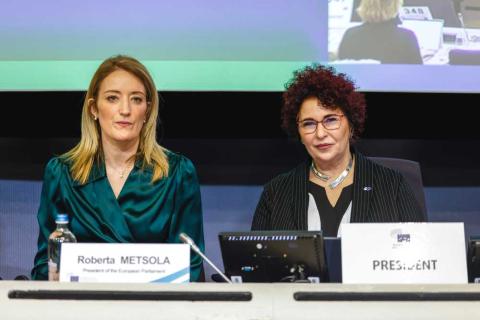
At the European Economic and Social Committee plenary session on Wednesday, EESC members discussed the EU's response to geopolitical challenges with Roberta Metsola, President of the European Parliament. The presidents of both institutions agreed that competitiveness, together with more strategic autonomy, is crucial in the current challenging times.
President Metsola put emphasis on the single market and the opportunities it offers: We must return to growth and lower our dependencies, while doubling-down on the green and digital transitions. Europe should play on its strengths wisely and make sure our active trade policy brings benefits to Europeans every day
.
For EESC President Christa Schweng, these aspects are essential for the prosperity of people and businesses in the EU: It is a make-or-break moment, and only through coordinated efforts can we successfully build a more resilient, fair and sustainable future in which nobody is left behind.
The discussion also touched on the EU's response to external economic factors such as the American Inflation Reduction Act, Russia's war of aggression against Ukraine, and the volatility of fossil fuel prices, and internal challenges such as the lack of a skilled workforce that Europe is currently experiencing.
A well-functioning democracy is essential for European society to be able to successfully face current challenges. That is why the EESC and the European Parliament are looking to further strengthen their cooperation, and actively work on ensuring the highest possible turnout in the upcoming European elections in 2024.
The debate demonstrated that civil society has a critical role to play in improving EU policies and the way they are implemented. Citizens want a bigger say in the EU, a point proven during the Conference on the Future of Europe. The EESC will continue its efforts to link EU policy-makers with representatives of organised civil society, to make use of their expertise and hands-on experience.
Work organisation
Downloads
-
PR EESC and EP presidents: the EU's competitiveness is becoming more important than even before
Recommended for you
Współtworzenie usług publicznych w sektorze opieki zdrowotnej przyczyni się do silniejszej demokracji uczestniczącej w UE
News
Podczas wydarzenia zorganizowanego przez Europejski Komitet Ekonomiczno-Społeczny (EKES) i Uniwersytet w Debreczynie podkreślono kluczowe znaczenie współtworzenia usług świadczonych w interesie…
Zorganizowane społeczeństwo obywatelskie UE nie zostawi Ukrainy
News
Europejski Komitet Ekonomiczno-Społeczny (EKES) zorganizował 19 lipca konferencję wysokiego szczebla nt. pomocy dla Ukrainy i jej odbudowy. Podczas tego wydarzenia zobowiązał się w pełni i na…
Europejski Komitet Ekonomiczno-Społeczny w Gdańsku. - Wolontariusze potrzebują rządowego wsparcia
News
O tendencjach w rozwoju wolontariatu w Unii Europejskiej, o nowych formach wolontariatu, ale też o wsparciu organów publicznych dla organizacji i wolontariuszy i jego roli gospodarczej - o tym, i nie…
Nowy europejski Bauhaus niesie wszechstronne korzyści dla przyszłości Europy
News
Uczestnicy seminarium internetowego zorganizowanego przez Europejski Komitet Ekonomiczno-Społeczny (EKES) opowiedzieli się za tym, by nowy europejski Bauhaus służył obywatelom Europy i pomagał w…
Instrumentalizacja migrantów i ukraiński kryzys uchodźczy wymagają ponownego namysłu nad polityką migracyjną
News
Finansowana przez państwo instrumentalizacja migrantów w celu destabilizacji UE oraz wojna w Ukrainie, która doprowadziła do niespotykanego dotąd napływu uchodźców, sprawiają, że niezbędny staje się…