
European Economic
and Social Committee
EESC and EP presidents: the EU's competitiveness is becoming more important than even before
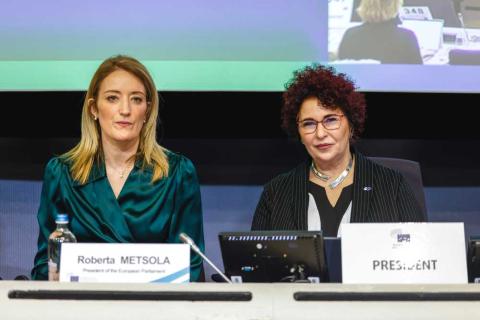
At the European Economic and Social Committee plenary session on Wednesday, EESC members discussed the EU's response to geopolitical challenges with Roberta Metsola, President of the European Parliament. The presidents of both institutions agreed that competitiveness, together with more strategic autonomy, is crucial in the current challenging times.
President Metsola put emphasis on the single market and the opportunities it offers: We must return to growth and lower our dependencies, while doubling-down on the green and digital transitions. Europe should play on its strengths wisely and make sure our active trade policy brings benefits to Europeans every day
.
For EESC President Christa Schweng, these aspects are essential for the prosperity of people and businesses in the EU: It is a make-or-break moment, and only through coordinated efforts can we successfully build a more resilient, fair and sustainable future in which nobody is left behind.
The discussion also touched on the EU's response to external economic factors such as the American Inflation Reduction Act, Russia's war of aggression against Ukraine, and the volatility of fossil fuel prices, and internal challenges such as the lack of a skilled workforce that Europe is currently experiencing.
A well-functioning democracy is essential for European society to be able to successfully face current challenges. That is why the EESC and the European Parliament are looking to further strengthen their cooperation, and actively work on ensuring the highest possible turnout in the upcoming European elections in 2024.
The debate demonstrated that civil society has a critical role to play in improving EU policies and the way they are implemented. Citizens want a bigger say in the EU, a point proven during the Conference on the Future of Europe. The EESC will continue its efforts to link EU policy-makers with representatives of organised civil society, to make use of their expertise and hands-on experience.
Work organisation
Downloads
-
PR EESC and EP presidents: the EU's competitiveness is becoming more important than even before
Recommended for you
Цифровият преход трябва да бъде справедлив: правата на човека и човешкият надзор трябва да продължат да заемат централно място
News
Европейският икономически и социален комитет (ЕИСК) привлича вниманието върху възможностите, които предлага цифровата революция, но предупреждава и за заплахите: ако бъдат приложени твърде бързо,…
Организациите на гражданското общество са първите точки за контакт по време на криза и те могат да помогнат за сплотеността на ЕС
News
На годишното си заседание Европейският икономически и социален комитет (ЕИСК) и националните икономически и социални съвети на ЕС обсъдиха интеграцията на хората, бягащи от войната в Украйна,…
YEYS! 2023: Младите хора искат по-прозрачен, цифров и опростен ЕС
News
На 23 и 24 март Европейският икономически и социален комитет (ЕИСК) беше домакин на 14-ото издание на проявата „Твоята Европа, твоето мнение!“ (YEYS!), която събра в Брюксел 105 ученици от 35 училища…
Участници от гражданското общество — незаменими съюзници за изпълнението на целите за устойчиво развитие
News
На пленарната си сесия през март Европейският икономически и социален комитет (ЕИСК) прие посланика Лъчезара Стоева, председател на Икономическия и социален съвет на ООН. Посланик Стоева изрази…
ЕС ще бъде по-конкурентоспособен, като подкрепя малките и средните предприятия
News
По време на пленарната си сесия през февруари Европейският икономически и социален комитет (ЕИСК) зае твърда позиция в полза на създаването на по-добра бизнес среда за МСП в Европа: законодателството…