
European Economic
and Social Committee
EESC and EP presidents: the EU's competitiveness is becoming more important than even before
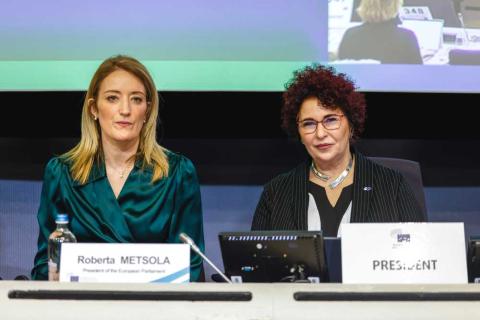
At the European Economic and Social Committee plenary session on Wednesday, EESC members discussed the EU's response to geopolitical challenges with Roberta Metsola, President of the European Parliament. The presidents of both institutions agreed that competitiveness, together with more strategic autonomy, is crucial in the current challenging times.
President Metsola put emphasis on the single market and the opportunities it offers: We must return to growth and lower our dependencies, while doubling-down on the green and digital transitions. Europe should play on its strengths wisely and make sure our active trade policy brings benefits to Europeans every day
.
For EESC President Christa Schweng, these aspects are essential for the prosperity of people and businesses in the EU: It is a make-or-break moment, and only through coordinated efforts can we successfully build a more resilient, fair and sustainable future in which nobody is left behind.
The discussion also touched on the EU's response to external economic factors such as the American Inflation Reduction Act, Russia's war of aggression against Ukraine, and the volatility of fossil fuel prices, and internal challenges such as the lack of a skilled workforce that Europe is currently experiencing.
A well-functioning democracy is essential for European society to be able to successfully face current challenges. That is why the EESC and the European Parliament are looking to further strengthen their cooperation, and actively work on ensuring the highest possible turnout in the upcoming European elections in 2024.
The debate demonstrated that civil society has a critical role to play in improving EU policies and the way they are implemented. Citizens want a bigger say in the EU, a point proven during the Conference on the Future of Europe. The EESC will continue its efforts to link EU policy-makers with representatives of organised civil society, to make use of their expertise and hands-on experience.
Work organisation
Downloads
-
PR EESC and EP presidents: the EU's competitiveness is becoming more important than even before
Recommended for you
Toghadh Séamus Boland ina Uachtarán ar Choiste Eacnamaíoch agus Sóisialta na hEorpa, agus gheall sé go gcuirfear an tsochaí shibhialta i gcroílár na hEorpa
News
Toghadh Séamus Boland na hÉireann ar an 35ú Uachtarán ar Choiste Eacnamaíoch agus Sóisialta na hEorpa (CESE) le haghaidh an téarma oifige 2025-2028. Is urlabhra riamh anall é do phobail na tuaithe…
CESE, Uachtarántacht na hÉireann agus an fhís choiteann atá acu
News
I ndiaidh na díospóireachta a reáchtáladh le Comhaltaí CESE le linn sheisiún iomlánach mhí Iúil, níl aon dabht faoi ach go bhfuil clár Uachtaránacht reatha an Aontais ag freagairt go mór do na…
#YEYS2022: Ceist na bréagaisnéise pléite ag aos óg na hEorpa agus a dtuairimí ina leith curtha in iúl acu don Leas-Uachtarán Jourová
News
Chuir daltaí meánscoile ó gach cearn den Eoraip ocht gcinn de thograí nithiúla faoi bhráid Leas-Uachtarán an Choimisiúin Eorpaigh um Luachanna agus um Thrédhearcacht, Věra Jourová. Bhí páirt á…
#CivilsocietyforUkraine
News
Cáineann CESE ionradh Rialtas na Rúise ar an Úcráin, ionradh atá gan údar agus gan chúis Rún ó Choiste Eacnamaíoch agus Sóisialta na hEorpa (CESE) maidir leis an gcogadh san Úcráin agus an tionchar…
Eagrán speisialta de CESE info
News
Eagrán speisialta de CESE info atá dírithe ar an Úcráin. Is féidir scéal Tetyana Ogarkova a léamh, bean a chuala fuaim ionradh na Rúise ar dhúiseacht di an 24 Feabhra.