This study analyses European Union (EU) policy through the lens of intergenerational poverty (IGP), shifting attention from poverty as a static condition to the long-term persistence and transmission of disadvantage across generations.
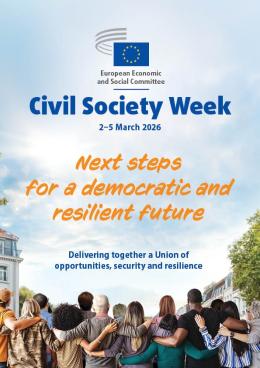
Europe is facing a pivotal moment. Social and economic inequalities, rapid technological change, anti-democratic forces and geopolitical instability are straining the foundations of the European project.
With democracy and civic space under mounting pressure, civil society organisations, human rights defenders and free media face growing constraints - from restrictive laws and disinformation campaigns to underfunding and public distrust. Deepening polarisation and eroding trust in institutions further undermine Europe’s democratic model.
The opinion examines the 2030 Consumer Agenda, a new five-year strategy for EU consumer policy. The Agenda addresses four key priority areas: a) an action plan for consumers in the single market; b) digital fairness and consumer protection online; c) sustainable consumption; d) effective enforcement and redress.
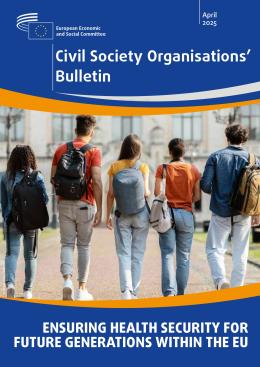
The topic of the conference was the mental and physical condition of young Europeans and the role of civil society organisations in supporting it. The event was organised as part of the Polish presidency of the EU Council on the initiative of the Minister for Civil Society, Adriana Porowska, and the Civil Society Organisations' Group of the EESC.
Ensuring health security for future generations within the EU
In this issue:
Members on ways to ensure (mental) health security
Guest articles by Lejla Šehić Relić (Centre for European Volunteering), Ian Mostert (Dutch Institute for Nature Education) and Christelle Savall (Young European Federalists)
Interview with rapporteur Miguel Ángel Cabra de Luna on how to address loneliness (EESC opinion SOC/813)
Joint Conference of the Minister for Civil Society of the Republic of Poland and the EESC Civil Society Organisations' Group
Event type
Conference
Location
Chancellery of the Prime Minister
Warsaw
Poland
The conference was held on 15 May 2025 at the Chancellery of the Prime Minister in Warsaw, Al. Ujazdowskie 1/3, as part of the Polish Presidency of the Council of the EU.