
European Economic
and Social Committee
Cross-border energy infrastructure planning
Background
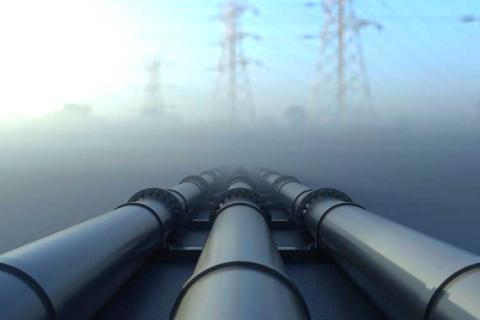
In recent months and years, cross-border energy flows have proven their worth in securing supplies across the Union for both natural gas and electricity. Existing infrastructures have proven their resilience to transport energy flows to where they are needed most and to mitigate imbalances.
In addition, existing and new infrastructures will be necessary to make the transition to a sustainable energy system in a cost-efficient manner, both for the development, integration and transportation of renewable electricity and the import and transport of renewable hydrogen. Integrated offshore grids will be essential to fully develop the potential for offshore renewable energy generation, while onshore interconnections between Member States will allow for this renewable energy to be transported further inland.
This exploratory opinion, requested by the Belgian presidency of the Council of the EU, aims at providing significant contributions to the forthcoming discussions which are likely to be held by the next Commission. These discussions will probably focus on the future governance of the Energy Union, including potential targets for 2040, and will address achieving Climate Law targets. Nevertheless, every possible strategy will need to take into account the challenges presented by the various social and economic dimensions.
Key points
The EESC points out that:
- The energy infrastructure, like infrastructure for transporting and distributing energy, cannot be treated like any other commodity and must instead be classified as a service of general interest for the economy and the population.
- Particular attention should be paid to defining grid development, including cross-borders interconnections, both onshore and offshore, as critical infrastructure of an overriding public interest, including climate protection as a regulatory objective and, more generally, synchronising the planning of renewable energies and the electricity grid more effectively.
- Recognising the rising demand, it is particular important that substantial investments are made in electricity networks to stimulate the European economy and create high-quality (green) jobs.
Additional information
Section: Transport, Energy, Infrastructure and the Information Society (TEN)
Opinion number: TEN/823
Opinion type: Exploratory presidency
Rapporteur: Thomas Kattnig (Group II - Austria)
Date of adoption by section: 19 December 2023
Result of the vote: 67 in favour, 0 against, 3 abstentions
Date of adoption in plenary: 17-18 January 2024
Result of the vote: 190 in favour, 1 against, 4 abstentions
Contact
Marco Pezzani
Press Officer
Tel.: +32 2 546 9793 | Mob: +32 470 881 903
E-mail: marco.pezzani@eesc.europa.eu
Giorgia Bordignon
Administrator
Tel.: +32 546 8535
Recommended for you
Energi – EESK varnar för nya beroendeförhållanden
News
Europeiska ekonomiska och sociala kommittén (EESK) intar en fast hållning i energifrågan i ett yttrande som antogs vid dess plenarsession i september: kommissionens förslag är ett steg i rätt…
Svenska rådsordförandeskapet 2023: Ukraina står fortfarande högst upp på dagordningen
News
Vid Europeiska ekonomiska och sociala kommitténs (EESK) plenarsession i januari hölls en debatt under vilken Sveriges EU-minister Jessika Roswall redogjorde för prioriteringarna för det nya…
Ditt Europa, din mening! 2023: Ungdomar efterlyser ett mer transparent, digitalt och förenklat EU
News
Den 23–24 mars stod Europeiska ekonomiska och sociala kommittén (EESK) för 14:e gången värd för ”Ditt Europa, din mening!” (YEYS!) i Bryssel, med 105 elever från 35 skolor från alla 27 EU-länder och…
EESK diskuterar agendan för det svenska EU-ordförandeskapet 2023
News
Vid sammanträdet i Europeiska ekonomiska och sociala kommittén (EESK) i Stockholm redogjorde Sveriges statssekreterare med ansvar för EU-frågor, Christian Danielsson, för den politiska inriktningen…
EU–Ukraina: driftskompatibilitet och solidaritet – nyckelfaktorer för transportförbindelserna
News
Vid en debatt som Europeiska ekonomiska och sociala kommittén (EESK) höll i Bryssel framhöll deltagarna vikten av infrastruktur och harmoniserade standarder för att sammanlänka EU med dess…