
European Economic
and Social Committee
Cross-border energy infrastructure planning
Background
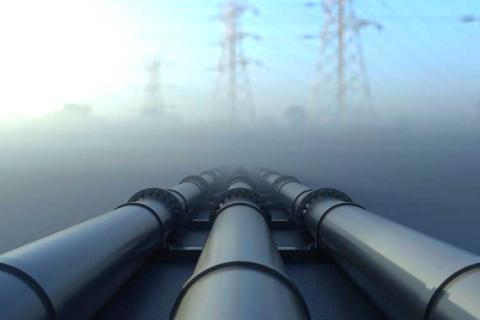
In recent months and years, cross-border energy flows have proven their worth in securing supplies across the Union for both natural gas and electricity. Existing infrastructures have proven their resilience to transport energy flows to where they are needed most and to mitigate imbalances.
In addition, existing and new infrastructures will be necessary to make the transition to a sustainable energy system in a cost-efficient manner, both for the development, integration and transportation of renewable electricity and the import and transport of renewable hydrogen. Integrated offshore grids will be essential to fully develop the potential for offshore renewable energy generation, while onshore interconnections between Member States will allow for this renewable energy to be transported further inland.
This exploratory opinion, requested by the Belgian presidency of the Council of the EU, aims at providing significant contributions to the forthcoming discussions which are likely to be held by the next Commission. These discussions will probably focus on the future governance of the Energy Union, including potential targets for 2040, and will address achieving Climate Law targets. Nevertheless, every possible strategy will need to take into account the challenges presented by the various social and economic dimensions.
Key points
The EESC points out that:
- The energy infrastructure, like infrastructure for transporting and distributing energy, cannot be treated like any other commodity and must instead be classified as a service of general interest for the economy and the population.
- Particular attention should be paid to defining grid development, including cross-borders interconnections, both onshore and offshore, as critical infrastructure of an overriding public interest, including climate protection as a regulatory objective and, more generally, synchronising the planning of renewable energies and the electricity grid more effectively.
- Recognising the rising demand, it is particular important that substantial investments are made in electricity networks to stimulate the European economy and create high-quality (green) jobs.
Additional information
Section: Transport, Energy, Infrastructure and the Information Society (TEN)
Opinion number: TEN/823
Opinion type: Exploratory presidency
Rapporteur: Thomas Kattnig (Group II - Austria)
Date of adoption by section: 19 December 2023
Result of the vote: 67 in favour, 0 against, 3 abstentions
Date of adoption in plenary: 17-18 January 2024
Result of the vote: 190 in favour, 1 against, 4 abstentions
Contact
Marco Pezzani
Press Officer
Tel.: +32 2 546 9793 | Mob: +32 470 881 903
E-mail: marco.pezzani@eesc.europa.eu
Giorgia Bordignon
Administrator
Tel.: +32 546 8535
Recommended for you
Skrajni čas za vlaganje v mlade na Zahodnem Balkanu
News
Da bi vlade držav Zahodnega Balkana svojim državljanom zagotovile boljšo prihodnost, se morajo lotiti reševanja težav, s katerimi se srečujejo mladi, ki imajo ključno vlogo pri njenem ustvarjanju.…
Vaša Evropa, vaš glas! v letu 2023: Mladi si želijo, da bi bila EU preglednejša, bolj digitalna in enostavnejša
News
Evropski ekonomsko-socialni odbor (EESO) je 23. in 24. marca gostil dogodek Vaša Evropa, vaš glas! Potekal je v Bruslju, udeležilo pa se ga je 105 dijakov 35 šol iz vseh 27 držav članic EU in sedem…
Začetek zbiranja prijav za nagrade za civilno družbo EESO na temo duševnega zdravja
News
Organizacije civilne družbe, posamezniki in zasebna podjetja lahko svoje nepridobitne projekte prijavijo za nagrado EESO, namenjeno spodbujanju duševnega zdravja Evropejcev Evropski ekonomsko…
Oddajte svoj glas junija 2024: EESO poziva Evropejce, naj volijo za enotno in demokratično Evropo
News
Demokracija po vsem svetu nazaduje, širijo se dezinformacije in vse več je nezadovoljstva zaradi naraščajoče inflacije ter preteče nevarnosti vojne, zato so letošnje evropske volitve, na katerih bodo…
Ohranjanje zagona širitve EU: prizadevanje civilne družbe, da bi s postopnim vključevanjem prinesla koristi Zahodnemu Balkanu
News
Evropski ekonomsko-socialni odbor (EESO) je 20 let po pristopu Slovenije k EU v Ljubljani zbral politične voditelje in voditelje civilne družbe, da bi obeležili to simbolično obletnico in poudarili…