
European Economic
and Social Committee
Cross-border energy infrastructure planning
Background
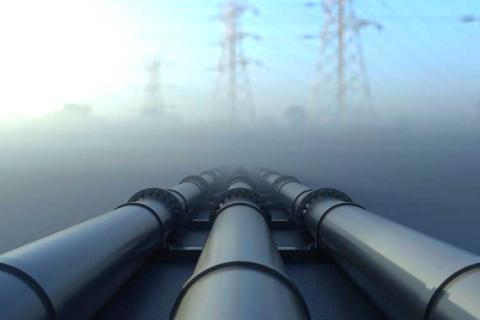
In recent months and years, cross-border energy flows have proven their worth in securing supplies across the Union for both natural gas and electricity. Existing infrastructures have proven their resilience to transport energy flows to where they are needed most and to mitigate imbalances.
In addition, existing and new infrastructures will be necessary to make the transition to a sustainable energy system in a cost-efficient manner, both for the development, integration and transportation of renewable electricity and the import and transport of renewable hydrogen. Integrated offshore grids will be essential to fully develop the potential for offshore renewable energy generation, while onshore interconnections between Member States will allow for this renewable energy to be transported further inland.
This exploratory opinion, requested by the Belgian presidency of the Council of the EU, aims at providing significant contributions to the forthcoming discussions which are likely to be held by the next Commission. These discussions will probably focus on the future governance of the Energy Union, including potential targets for 2040, and will address achieving Climate Law targets. Nevertheless, every possible strategy will need to take into account the challenges presented by the various social and economic dimensions.
Key points
The EESC points out that:
- The energy infrastructure, like infrastructure for transporting and distributing energy, cannot be treated like any other commodity and must instead be classified as a service of general interest for the economy and the population.
- Particular attention should be paid to defining grid development, including cross-borders interconnections, both onshore and offshore, as critical infrastructure of an overriding public interest, including climate protection as a regulatory objective and, more generally, synchronising the planning of renewable energies and the electricity grid more effectively.
- Recognising the rising demand, it is particular important that substantial investments are made in electricity networks to stimulate the European economy and create high-quality (green) jobs.
Additional information
Section: Transport, Energy, Infrastructure and the Information Society (TEN)
Opinion number: TEN/823
Opinion type: Exploratory presidency
Rapporteur: Thomas Kattnig (Group II - Austria)
Date of adoption by section: 19 December 2023
Result of the vote: 67 in favour, 0 against, 3 abstentions
Date of adoption in plenary: 17-18 January 2024
Result of the vote: 190 in favour, 1 against, 4 abstentions
Contact
Marco Pezzani
Press Officer
Tel.: +32 2 546 9793 | Mob: +32 470 881 903
E-mail: marco.pezzani@eesc.europa.eu
Giorgia Bordignon
Administrator
Tel.: +32 546 8535
Recommended for you
Tetyana Ogarkova: "The day of victory will come but it will not bring normality back"
Agenda
On 24 February 2022, the lives of millions of Ukrainians were turned upside down. Now, when we say the word "victory", we expect that day to be the way things used to be. A normal day, a day of peace…
Lutte contre la précarité énergétique: garantir un approvisionnement énergétique abordable devrait figurer au premier rang des priorités politiques des pays de l’UE
News
Alors que le nombre de ménages qui sont dans l’incapacité de chauffer leur logement va vraisemblablement augmenter dans l’Union, avec une inflation annuelle de l’énergie qui dépasse 40 %, il y a…
Les zones rurales ont le potentiel pour produire davantage de résultats
News
Si l’attrait de la vie à la campagne s’est accru ces toutes dernières années, de nombreuses zones rurales de l’Union restent confrontées à un certain nombre de problèmes qui dissuadent les personnes…
Pour lutter contre le sans-abrisme, il faut une approche globale et une action collective
News
Le 7 octobre dernier, le Comité économique et social européen (CESE) a tenu une conférence sur le sans-abrisme et les moyens d’éradiquer ce phénomène d’ici à 2030, en appliquant le principe du…
Un rôle actif pour la société civile organisée est essentiel à la résilience de l’Union européenne
News
Le CESE a tenu un débat en session plénière sur l’importance croissante de la société civile organisée et des villes pour mettre l’Europe en capacité de faire face aux chocs asymétriques et aux…