
European Economic
and Social Committee
Viktiga industrisektorer i Europa uppmanar EESK att maximera sin roll i det politiska beslutsfattandet
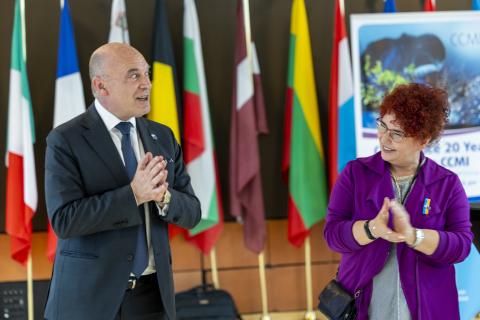
Vid ett evenemang som uppmärksammade 20 år av rådgivande arbete inom EESK på området industriell omvandling argumenterade viktiga industrisektorer inom EU för ett mer datadrivet och framtidsinriktat svar på störningarna till följd av covid-19, den ryska invasionen, klimatkrisen samt den industriella och sociala omvandlingen.
Den 8 juni firade EESK 20-årsjubileet för sitt rådgivande utskott för industriell omvandling (CCMI). Företrädare för gruv-, energi-, försvars- och rymdindustrin betonade att EU:s politik i en radikalt förändrad värld måste återspegla både industrins krav och det sociala sammanhanget på ett korrekt sätt.
EESK:s ordförande Christa Schweng lyfte i sitt öppningstal fram ”åtagandet att arbeta sida vid sida med det civila samhället och EU-institutionerna samt alla berörda parter, med målet att finna gemensamma lösningar på de utmaningar som våra industrier står inför.”
Thierry Breton, kommissionsledamot med ansvar för inre marknaden, hyllade det sätt på vilket ”EESK fortsätter att spela en nyckelroll när det gäller industripolitiska frågor.” Han berättade för deltagarna i evenemanget att utmaningarna i anslutning till klimatförändringarna, pandemin och kriget vid EU:s tröskel innebär att Europa skyndsamt måste se till att det kan ta kontroll över sin industriella framtid.
CCMI:s ordförande Pietro Francesco De Lotto betonade utskottets roll när det gäller att ställa nya frågor, kartlägga nya analysområden och samla ny expertis till samtal med målet att säkerställa att samtliga berörda aktörers synpunkter beaktas. ”Rådgivande utskottet för industriell omvandling är en förebild när det gäller nya synsätt på framtida social dialog i EU-institutionerna”, menade han.
Monika Sitárová, vice ordförande i CCMI, konstaterade att ”våra rapporter utgör en faktabas för våra yttranden och rekommendationer. Vi använder vår erfarenhet av social dialog för att hantera industriell omvandling och dess sociala konsekvenser, samt för att förutse förändringar och bidra till lösningar som är socialt godtagbara.” (ks)