
European Economic
and Social Committee
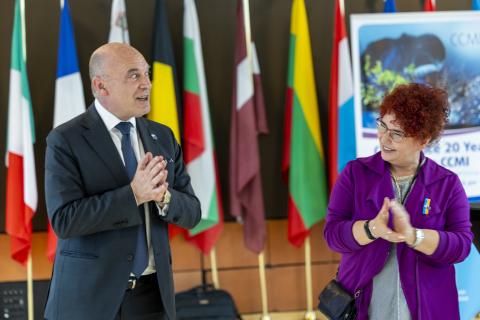
At an event celebrating 20 years of the EESC advising on industrial change, key EU industrial sectors argued for a more data-driven and future-oriented response to the disruption arising from COVID-19, Russian aggression, the climate crisis, and industrial and social transformation.
On 8 June, the EESC celebrated the 20th anniversary of its Consultative Commission on Industrial Change (CCMI). Representatives from the mining, energy, defence and aerospace industries stressed that, in a radically changed world, EU policy has to accurately reflect both industrial imperatives and the social context.
EESC President Christa Schweng, opening the event, underlined the commitment to "work together with organised civil society, the EU institutions and all relevant stakeholders to find joint solutions to the challenges that our industries are facing."
Thierry Breton, Commissioner for the Internal Market, paid tribute to how "the EESC continues to play a key role in industrial policy issues." He told participants that the challenges of climate change, the pandemic and war on the EU's doorstep mean that Europe urgently needs to be able to take control of its industrial destiny.
Pietro Francesco De Lotto, President of the CCMI, highlighted the commission's role in asking new questions, anticipating new fields of analysis and bringing new expertise to discussions to ensure that all stakeholders' views are taken into account. "The Consultative Commission on Industrial Change is a model for rethinking the future of social dialogue in the European institutions," he said.
Monika Sitárová, CCMI Vice-President, said: "our reports provide an evidence base for our opinions and recommendations. We use our experience of social dialogue to deal with industrial change and its social impact, to anticipate change and to contribute to solutions that are socially acceptable." (ks)