
European Economic
and Social Committee
De vigtigste europæiske industrier tilskynder EØSU til at maksimere sin rolle i den politiske beslutningsproces
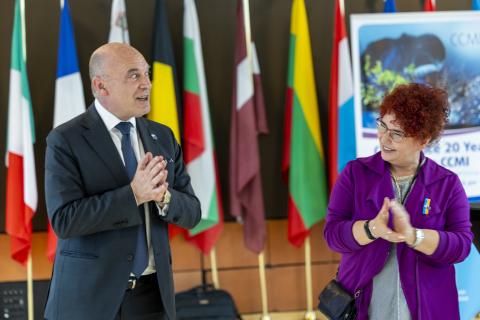
Ved et arrangement, hvor det blev fejret, at EØSU har rådgivet om industrielle ændringer i 20 år, argumenterede centrale europæiske industrisektorer for en mere datadrevet og fremtidsorienteret reaktion på de forstyrrelser, som covid-19, den russiske aggression, klimakrisen og den industrielle og sociale omstilling har medført.
EØSU's Rådgivende Kommission for Industrielle Ændringer (CCMI) fejrede sit 20-årsjubilæum den 8. juni. Repræsentanter fra mine-, energi-, forsvars- og luftfartsindustrierne understregede, at EU's politik i en radikalt ændret verden nøjagtigt skal afspejle både de krav, der stilles til industrien, og den sociale kontekst.
EØSU's formand Christa Schweng, der åbnede arrangementet, fremhævede forpligtelsen til at arbejde sammen med det organiserede civilsamfund, EU-institutionerne og alle relevante interessenter om at finde fælles løsninger på de udfordringer, som EU's industrier står over for.
Kommissær for det indre marked Thierry Breton hyldede, hvordan EØSU fortsat spiller en central rolle i industripolitiske spørgsmål. Han fortalte deltagerne ved arrangementet, at udfordringerne i forbindelse med klimaændringerne, pandemien og krigen lige uden for EU betyder, at EU hurtigst muligt skal kunne tage ansvar for sin industrielle fremtid.
CCMI's formand Pietro Francesco De Lotto understregede udvalgets rolle med hensyn til at stille nye spørgsmål, forudse nye analysefelter og komme med ny ekspertise i forbindelse med drøftelserne for at sikre, at der tages hensyn til alle interessenters synspunkter. Han sagde, at Den Rådgivende Kommission for Industrielle Ændringer er en model for gentænkning af den sociale dialogs fremtid i de europæiske institutioner.
CCMI's næstformand Monika Sitárov udtalte, at Den Rådgivende Kommissions rapporter udgør et evidensgrundlag for udtalelser og anbefalinger, og at Den Rådgivende Kommission bruger sine erfaringer fra den sociale dialog til at håndtere de industrielle ændringer og deres sociale virkninger og til at bidrage til løsninger, der er socialt acceptable. (ks)