The ECO Section organizes this public hearing to discuss on the current framework on resolution and insolvency, supervision, and bank deposit insurance scheme, and its reform. This event will bring institutional actors and civil society. Its conclusions will feed the work on the EESC opinion on the reform of the bank crisis management and deposit insurance framework.
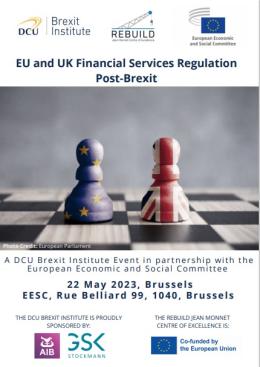
Brexit has created significant challenges for policymakers in the European Union (EU), in particular in the financial sector, as the UK is now outside its regulatory framework. The EU-UK Trade and Cooperation Agreement includes a very thin financial sector chapter and constitutes a limited basis for regulatory cooperation. The panelists will discuss recent trends in financial sector regulation across the Channel, including divergence between the EU and the UK, and the threats posed by this divergence for financial stability and the risks of further fragmentation.
The EESC´s Consultative Commission on Industrial Change (CCMI) organised a hearing on decarbonisation of European industry and the role of innovation and digitalisation in driving it, with the participation of the European Commission.
The EESC´s Consultative Commission on Industrial Change (CCMI) organised a hearing on the Critical Raw Materials Act, with the participation of many civil society stakeholders.
The EESC´s Consultative Commission on Industrial Change (CCMI) organised a second hearing on the review of the CO2 emission standards for heavy-duty vehicles, with the participation of many civil society stakeholders.
How can these regions become drivers for growth and development?
Event type
Public hearing
Location
Umeå Folkets hus,
Skolgatan 59
Umeå
Sweden
The European Economic and Social Committee (EESC) will be producing an own-initiative opinion on the main challenges faced by EU islands and mountainous and sparsely populated areas, which is scheduled for adoption at the EESC's September plenary session. In this context, the EESC, along with the Conference of Peripheral Maritime Regions (CPMR) and the North Sweden European Office (NSEO), will be holding a public hearing in Umeå (Sweden) on 4 May 2023 entitled "Challenges and opportunities that the digital and energy transitions present to the northern sparsely populated areas and islands. How can these regions become drivers for growth and development?". The hearing is an event under the Swedish Presidency of the Council of the EU.
The purpose of the hearing will be to contribute to the EESC own-initiative opinion by collecting suggestions on how to make the EU Climate Diplomacy more effective. We will explore the geopolitical repercussions of the European Green Deal for business actors and debate on how to intensify the dialogue on business opportunities and risks related to climate change.
The Commission adopted in November 2022 a new EU Global Health Strategy to improve global health security and deliver better health for all, positioning global health as an essential pillar of EU external policy. The Strategy will help deliver the universal health-related targets in the United Nations' 2030 Sustainable Development Goals.
EESC, Van Maerlant Building, Rue Van Maerlant 2, room VMA 3
Brussels
Belgium
The Day of the Liberal Professions will take place on 2 May 2023 at the EESC in Brussels. This annual event brings together key players from Europe's liberal professions, as well as key policy makers from the European Commission, European Parliament and Member States.