
European Economic
and Social Committee
Modernisering van het cohesiebeleid voor een sterkere, veerkrachtigere EU
Het cohesiebeleid is van oudsher een pijler van de Europese integratie en bevordert de economische, sociale en geografische eenheid in de hele EU. Nu het meerjarig financieel kader (MFK) voor de periode na 2027 vorm krijgt, is het van essentieel belang het cohesiebeleid te moderniseren om de efficiëntie, duurzaamheid en het reactievermogen op nieuwe uitdagingen te vergroten.
In zijn onlangs goedgekeurde advies Versterking van de resultaatgerichtheid van het cohesiebeleid na 2027 – uitdagingen, risico’s en kansen benadrukt het EESC de noodzaak van een resultaatgerichte aanpak om ervoor te zorgen dat het cohesiebeleid tastbare voordelen blijft opleveren en tegelijkertijd ongelijkheden vermindert en een duurzaam concurrentievermogen bevordert.
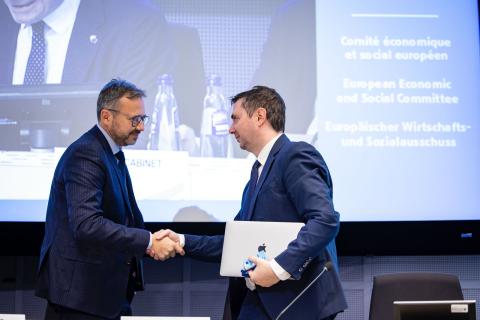
"Het cohesiebeleid moet het belangrijkste EU-instrument voor regionale ontwikkeling blijven. Bij een resultaatgerichte aanpak gaat het erom dat elke euro die wordt uitgegeven bijdraagt tot economisch en sociaal welzijn", aldus de rapporteur voor het advies, David Sventek.
Het MFK 2028+ moet grondig worden herzien om de regionale ontwikkeling, de groene en de digitale transitie en het economische concurrentievermogen te ondersteunen. Met een investeringsbehoefte van meer dan 750-800 miljard EUR per jaar is een sterke EU-financiering essentieel.
Het EESC zou graag zien dat de begrotingscapaciteit op 1,8 % van het bbp van de EU wordt gehandhaafd en dat de middelen voor het cohesiebeleid worden verhoogd. Tot de belangrijkste prioriteiten behoren gedeelde governance, regionaal beleid op maat, resultaatgerichte financiering en vereenvoudigde processen.
Een resultaatgerichte aanpak verhoogt de efficiëntie, maar vereist een betere uitvoering en monitoring. Door concurrentievermogen en sociale investeringen met elkaar in evenwicht te brengen, de technische ondersteuning te versterken en te zorgen voor transparantie zal het cohesiebeleid meer effect sorteren, de economische veerkracht bevorderen en de ongelijkheden in Europa verkleinen. (tk)