
European Economic
and Social Committee
Modernizar a política de coesão em prol de uma UE mais forte e resiliente
A política de coesão é, há muito, um pilar da integração europeia, promovendo a unidade económica, social e geográfica em toda a UE. No momento em que o Quadro Financeiro Plurianual (QFP) pós-2027 começa a ganhar forma, é essencial modernizar a política de coesão para aumentar a eficiência, a sustentabilidade e a capacidade de resposta aos novos desafios.
No Parecer – Reforçar a orientação para a obtenção de resultados da política de coesão após 2027, recentemente adotado pelo CESE, sublinha-se a necessidade de adotar uma abordagem orientada para os resultados, a fim de garantir que a política de coesão continue a produzir benefícios tangíveis, reduzindo as desigualdades e promovendo a competitividade sustentável.
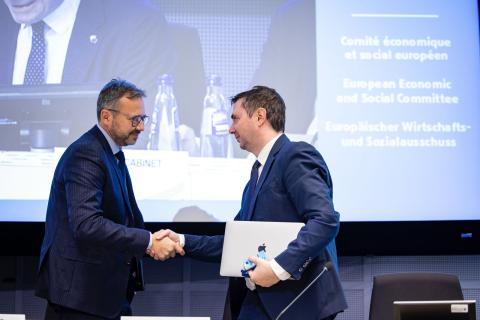
«A política de coesão deve continuar a ser o principal instrumento da UE para o desenvolvimento regional. Uma abordagem orientada para os resultados garante que cada euro gasto contribui para o bem-estar económico e social», afirmou o relator do parecer, David Sventek.
O QFP pós-2027 terá de ser objeto de uma revisão completa para apoiar o desenvolvimento regional, as transições ecológica e digital e a competitividade económica. Tendo em conta que as necessidades de investimento são superiores a 750-800 mil milhões de euros por ano, é essencial que a UE assegure um financiamento robusto.
O CESE solicita a manutenção da capacidade orçamental em 1,8% do produto interno bruto da UE e o reforço do financiamento da política de coesão. Entre as principais prioridades encontram-se a governação partilhada, políticas regionais adaptadas, financiamento baseado em resultados e processos simplificados.
Uma abordagem orientada para os resultados aumenta a eficiência, mas também exige uma melhor execução e controlo. O equilíbrio entre a competitividade e o investimento social, o reforço do apoio técnico e a garantia da transparência tornarão a política de coesão mais eficaz, promovendo a resiliência económica e reduzindo as disparidades em toda a Europa. (tk)