
European Economic
and Social Committee
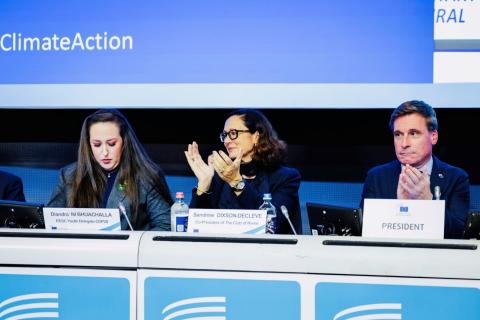
Civil society organisations express disappointment at the outcomes of COP28, but view them as a platform for increased European action on the global stage. The European Economic and Social Committee (EESC) remains committed to addressing the climate crisis, emphasisng the need for greater ambition and youth involvement.
COP28 marks a historic shift as countries commit to transitioning away from fossil fuels in energy systems for the first time in thirty years. EESC President Oliver Röpke acknowledges this progress but insists on a complete fossil fuel phase-out and stresses the importance of engaging young people in these efforts.
European Union negotiators claim success in keeping alive the Paris Agreement's goal of limiting the global temperature increase. COP28 focuses on the energy sector, targeting a 43% emissions reduction by 2030 and aiming for net-zero emissions by 2050. However, the agreement is the target of criticism due to its shortcomings, including uncertainties about meeting the 1.5°C target, influence from petro-states and weak financial provisions for the transition.
Sandrine Dixson-Declève, Co-President of The Club of Rome, warns of increasing wealth inequality and social tensions resulting from inadequate burden-sharing. EESC Youth delegate Diandra Ni Bhuachalla says she is devastated by COP28's outcome, emphasising the importance of real people's experiences in countering fossil fuel lobbyists.
Despite concerns, EESC members recognise positive aspects of the Dubai agreement and pledge to address loopholes, while urging other EU institutions to do the same. The overarching message from the EESC debate is a resolute commitment: "We will not give up" on urgently tackling the climate crisis through continued EU and UN action. (ks)