At the initiative of the EESC’s Civil Society Organisations’ Group, this exhibition showcases projects that have been coordinated by the Danish architecture firm BIG-Bjarke Ingels Group.
An initiative of the Civil Society Organisations’ Group in cooperation with Friends of the Earth Europe
-
Location
EESC headquarters, JDE building, Rue Belliard/Belliardstraat 99-101
Brussels
Belgium
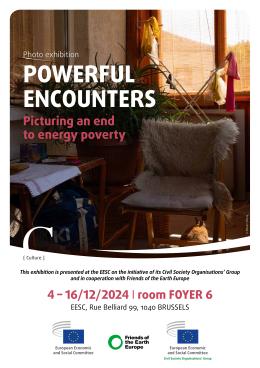
The European Economic and Social Committee (EESC) presents the photo exhibition ‘Powerful Encounters: Picturing an end to energy poverty’ on the initiative of its Civil Society Organisations’ Group and in cooperation with Friends of the Earth Europe. The work of photographer Miriam Strong will be exhibited from 4 to 16 December 2024 at the EESC’s premises in Brussels.
An exhibition organised by the Civil Society Organisations' Group of the EESC in the context of its conference 'EU food sovereignty: the role of agriculture, fisheries and consumers'
-
Location
CINC building, City of Culture of Galicia, Monte Gaiás
A Sustainable Recovery for the Future of Europe's Citizens
-
Location
Brussels
Belgium
Following the outbreak of the COVID-19 pandemic, 2020 has proved to be an endurance test for human and social rights, democratic values, the rule of law and economic resilience in the EU. While navigating stormy waters, organised civil society is playing a key role in coping with the countless pandemic-related challenges at European, national, regional and local level.
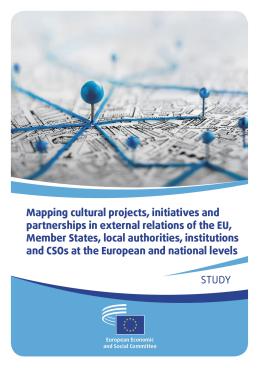
The External Relations Section (REX) of the European Economic and Social Committee (EESC) is responsible for dialogue between European civil society organisations and their homologues from the countries with which the European Union has formal relations (e.g. under the form of a Free Trade Agreement). Through this dialogue, made possible by a series of bilateral bodies, and through specialized opinions and information reports, the Committee is able to concretely contribute to EU foreign policy.
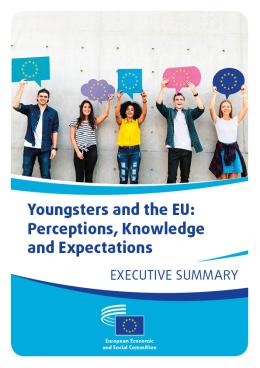
This study is conducted to better understand youngsters' relationship with the EU. The study examines 14- to 18-year-old youngsters' perceptions, and knowledge of the EU as well as their expectations towards the EU, and openness to the European diversity.
This study is conducted to better understand youngsters' relationship with the EU. The study examines 14- to 18-year-old youngsters' perceptions, and knowledge of the EU as well as their expectations towards the EU, and openness to the European diversity.