
European Economic
and Social Committee
The EU Space Act: Catalysing Europe’s Leap to Global Tech and Economic Power
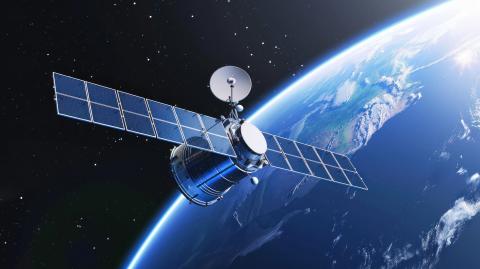
The EU Space Act present a critical opportunity to drive innovation, create high-quality jobs, and secure Europe’s space sector competitiveness on the global stage.
From an employer’s perspective, Europe’s space investment currently lags far behind other key players like the United States and China. This investment gap threatens not only innovation capacity but also the sustainability of high-skilled, well-paid jobs in a sector poised for explosive growth. The EESC’s call to ramp up public investment in space to 0.2% of GDP by 2030 is essential to providing the industrial backbone employers need to expand, innovate, and compete internationally.
EU employers require a stable, harmonised regulatory environment that minimises bureaucracy and fragmentation. The proposed Space Act’s vision of a unified internal market for space products, services, and data is promising, but success hinges on implementing a streamlined authorisation process.
A “one-stop shop” coordinated by EUSPA would reduce administrative burdens and speed market entry, enabling employers—especially SMEs and start-ups—to scale effectively. Clear, consistent rules also reduce legal uncertainty around compliance, allowing companies to invest confidently in innovation and workforce development.
For EU businesses, strategic autonomy is not just a policy slogan but a matter of operational resilience and supply chain security. Reducing dependence on non-EU providers for critical components such as semiconductors and propulsion technology ensures that European companies can maintain continuity in their operations and innovate with less exposure to geopolitical risks.
The EESC, in its Opinion to be adopted in December, rightly highlights the need for tailored support for SMEs, which form the backbone of the European space ecosystem. Facilitated access to funds and technology transfer will accelerate innovation and job creation in this high-tech sector.
Moreover, we understand that workforce skills are a foundation for competitiveness. The call for a European Space Skills Agenda is a forward-looking move to bridge skills gaps and attract top talent. With space-linked sectors expected to create over one million new jobs by 2040, employers must have access to a trained pipeline equipped for cutting-edge technologies like AI, robotics, and orbital energy.
Finally, binding standards on safety, sustainability, transparency, and social responsibility are critical for securing trust and long-term sector viability. Employers know that business success increasingly depends on meeting these expectations from regulators, investors, and the public alike.
The EU Space Act offers a once-in-a-generation chance to help build a thriving European space industrial ecosystem—one that supports innovation, boosts job creation, and enhances Europe’s strategic autonomy.
It is imperative for policymakers to take on board our recommendations and create the investment, regulatory clarity, and skills framework that European employers need to lead on the global space stage.
In doing so, employers, civil society and policymakers together can ensure that Europe’s space sector is not merely a follower but a pioneer in the next frontier of economic and technological progress.
By Marcin Nowacki, Member of the Employers' Group and President of the TEN Section of the EESC.
Recommended for you
Η εργαλειοποίηση των μεταναστών και η προσφυγική κρίση της Ουκρανίας επιβάλλουν ένα νέο ξεκίνημα για τη μεταναστευτική πολιτική
News
Η κρατική εργαλειοποίηση των μεταναστών, που αποσκοπεί στην αποσταθεροποίηση της ΕΕ, και ο τρέχων πόλεμος στην Ουκρανία, που οδηγεί σε πρωτόγνωρη εισροή προσφύγων, επιβάλλουν την επανεξέταση της…
YEYS! 2023: Οι νέοι ζητούν μια πιο διαφανή, ψηφιακή και απλοποιημένη ΕΕ
News
Στις 23 και 24 Μαρτίου, η Ευρωπαϊκή Οικονομική και Κοινωνική Επιτροπή (ΕΟΚΕ) φιλοξένησε την 14η διοργάνωση της εκδήλωσης «Η δική σου Ευρώπη, η δική σου φωνή!» (YEYS!), η οποία προσέλκυσε στις…
Η ΕΕ χρειάζεται αποτελεσματικότερη πολυμέρεια για την αντιμετώπιση των κινδύνων που σχετίζονται με την ασφάλεια στη θάλασσα, επισημαίνει η ΕΟΚΕ
News
Η Ευρωπαϊκή Οικονομική και Κοινωνική Επιτροπή (ΕΟΚΕ) ζητεί περισσότερες κοινές δράσεις σχετικά με τη στρατηγική της ΕΕ για την ασφάλεια στη θάλασσα και το σχετικό σχέδιο δράσης, που αποσκοπούν στη…
Η ΕΟΚΕ δρομολογεί τη διαδικασία υποβολής υποψηφιοτήτων για το Βραβείο της Κοινωνίας των Πολιτών, το οποίο θα αφορά την ψυχική υγεία
News
Οι οργανώσεις της κοινωνίας των πολιτών, οι ιδιώτες και οι ιδιωτικές εταιρείες μπορούν τώρα να υποβάλουν τα μη κερδοσκοπικά έργα τους για το βραβείο της ΕΟΚΕ που είναι αφιερωμένο στη στήριξη της…
#ReskillEU — Το εργατικό δυναμικό της Ευρώπης στους τομείς της ενέργειας και των μεταφορών χρειάζεται νέες δεξιότητες για να κάνει πραγματικότητα την απανθρακοποίηση
News
Για να επιτύχει η απανθρακοποίηση των τομέων της ενέργειας και των μεταφορών της ΕΕ, οι εν λόγω τομείς χρειάζονται εργαζομένους εξοπλισμένους με «νέες» δεξιότητες, προειδοποιεί η Ευρωπαϊκή Οικονομική…