
European Economic
and Social Committee
The EU Space Act: Catalysing Europe’s Leap to Global Tech and Economic Power
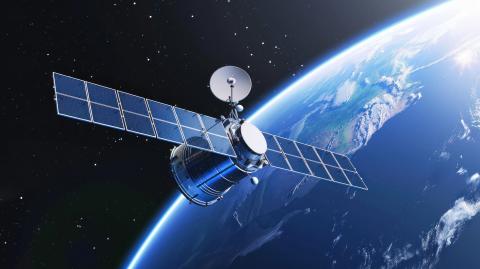
The EU Space Act present a critical opportunity to drive innovation, create high-quality jobs, and secure Europe’s space sector competitiveness on the global stage.
From an employer’s perspective, Europe’s space investment currently lags far behind other key players like the United States and China. This investment gap threatens not only innovation capacity but also the sustainability of high-skilled, well-paid jobs in a sector poised for explosive growth. The EESC’s call to ramp up public investment in space to 0.2% of GDP by 2030 is essential to providing the industrial backbone employers need to expand, innovate, and compete internationally.
EU employers require a stable, harmonised regulatory environment that minimises bureaucracy and fragmentation. The proposed Space Act’s vision of a unified internal market for space products, services, and data is promising, but success hinges on implementing a streamlined authorisation process.
A “one-stop shop” coordinated by EUSPA would reduce administrative burdens and speed market entry, enabling employers—especially SMEs and start-ups—to scale effectively. Clear, consistent rules also reduce legal uncertainty around compliance, allowing companies to invest confidently in innovation and workforce development.
For EU businesses, strategic autonomy is not just a policy slogan but a matter of operational resilience and supply chain security. Reducing dependence on non-EU providers for critical components such as semiconductors and propulsion technology ensures that European companies can maintain continuity in their operations and innovate with less exposure to geopolitical risks.
The EESC, in its Opinion to be adopted in December, rightly highlights the need for tailored support for SMEs, which form the backbone of the European space ecosystem. Facilitated access to funds and technology transfer will accelerate innovation and job creation in this high-tech sector.
Moreover, we understand that workforce skills are a foundation for competitiveness. The call for a European Space Skills Agenda is a forward-looking move to bridge skills gaps and attract top talent. With space-linked sectors expected to create over one million new jobs by 2040, employers must have access to a trained pipeline equipped for cutting-edge technologies like AI, robotics, and orbital energy.
Finally, binding standards on safety, sustainability, transparency, and social responsibility are critical for securing trust and long-term sector viability. Employers know that business success increasingly depends on meeting these expectations from regulators, investors, and the public alike.
The EU Space Act offers a once-in-a-generation chance to help build a thriving European space industrial ecosystem—one that supports innovation, boosts job creation, and enhances Europe’s strategic autonomy.
It is imperative for policymakers to take on board our recommendations and create the investment, regulatory clarity, and skills framework that European employers need to lead on the global space stage.
In doing so, employers, civil society and policymakers together can ensure that Europe’s space sector is not merely a follower but a pioneer in the next frontier of economic and technological progress.
By Marcin Nowacki, Member of the Employers' Group and President of the TEN Section of the EESC.
Recommended for you
Energi – EESK varnar för nya beroendeförhållanden
News
Europeiska ekonomiska och sociala kommittén (EESK) intar en fast hållning i energifrågan i ett yttrande som antogs vid dess plenarsession i september: kommissionens förslag är ett steg i rätt…
Svenska rådsordförandeskapet 2023: Ukraina står fortfarande högst upp på dagordningen
News
Vid Europeiska ekonomiska och sociala kommitténs (EESK) plenarsession i januari hölls en debatt under vilken Sveriges EU-minister Jessika Roswall redogjorde för prioriteringarna för det nya…
Ditt Europa, din mening! 2023: Ungdomar efterlyser ett mer transparent, digitalt och förenklat EU
News
Den 23–24 mars stod Europeiska ekonomiska och sociala kommittén (EESK) för 14:e gången värd för ”Ditt Europa, din mening!” (YEYS!) i Bryssel, med 105 elever från 35 skolor från alla 27 EU-länder och…
EESK diskuterar agendan för det svenska EU-ordförandeskapet 2023
News
Vid sammanträdet i Europeiska ekonomiska och sociala kommittén (EESK) i Stockholm redogjorde Sveriges statssekreterare med ansvar för EU-frågor, Christian Danielsson, för den politiska inriktningen…
EU–Ukraina: driftskompatibilitet och solidaritet – nyckelfaktorer för transportförbindelserna
News
Vid en debatt som Europeiska ekonomiska och sociala kommittén (EESK) höll i Bryssel framhöll deltagarna vikten av infrastruktur och harmoniserade standarder för att sammanlänka EU med dess…