
European Economic
and Social Committee
Cost-of-living crisis: quality public services can help tackle price hikes in transport, energy and housing
The April plenary of the European Economic and Social Committee (EESC) saw the adoption of an opinion on the high cost of living as part of the package of EESC opinions on the cost-of-living crisis. The package is made up of seven sector-specific opinions to be adopted at the April and June plenaries plus an umbrella opinion which will be adopted in July.
Investment in infrastructure, competitiveness and essential public services are key to addressing the current alarming cost-of-living crisis which is spreading all over Europe and bringing about severe consequences for households and businesses.
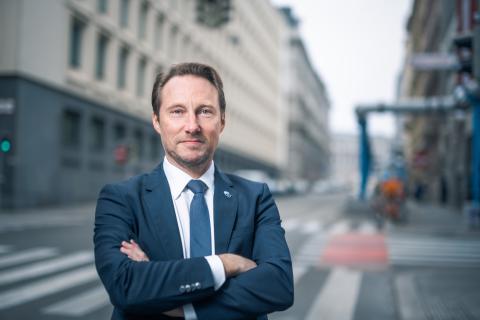
As the voice of organised civil society, the EESC actively shapes and proposes concrete structural policy solutions. In this regard, the Committee sounded the alarm at its April plenary session by adopting its opinion Price hikes in transport, energy and housing: the role of quality public services in tackling the high cost of living drawn up by Thomas Kattnig. In the opinion, the Committee says that the EU must strengthen the role of Services of General Interest to target infrastructure investment, quality jobs and clean, affordable energy production in Europe, ensuring that no one is left behind, especially regarding mobility and energy poverty.
‘The rise in energy prices and associated high inflation has led to considerable cost increases since 2021 in many sectors of the economy. As a result, the cost of living for people and companies has risen dramatically and this has had a corresponding impact on competitiveness as well as social costs and social cohesion,’ said Mr Kattnig. ‘Services of general interest can ensure that all individuals and stakeholders have access to the essential services - energy, water, mobility, education and housing - forming the basis for a decent life now and in the future, regardless of market mechanisms, regardless of your wallet. These services are the heartbeat of our social Europe. In addition, they can mitigate the impact of inflation and crises due to their non-profit-driven spirit,’ he concluded.
Focus on public services
In the EESC's view, Member States need flexibility, autonomy and freedom of choice to organise public services according to their own choices, needs and traditions, while ensuring high standards such as quality, safety, affordability and universal access. In the face of geopolitical upheaval, the EU must have the courage to rethink the existing fiscal rules: it must not be a contradiction to invest in security, climate protection and social infrastructure at the same time.
Fossil fuel subsidies (FFSs) continue to reduce the fiscal space of Member States to finance other priorities, such as high quality SGIs and long-lasting sustainable measures to alleviate the cost-of-living crisis and increase business competitiveness. A reduction of FFS based on a cost-benefit analysis can therefore provide short-term support for vulnerable households and more durable solutions for decarbonised electricity and heating systems, renovations and access to affordable SGIs.
The special rules for SGIs and SGEIs regarding State aid and public procurement must also be thoroughly revised, because they limit how SGIs and SGEIs can be organised and financed. It must be clearly established which SGIs are excluded from State aid law. For example, for certain SGEIs, such as housing, healthcare and social services, the EESC suggests providing more State aid and longer terms for the compensation of service provision.
The EESC proposals in transport, energy and housing
A major concern is transport and energy poverty, which are intertwined and faced by an ever-growing number of people. To effectively fight them, the Social Climate Fund and social climate plans are extremely valuable tools. Public transport plays a crucial role in safeguarding high-quality, universal and affordable mobility and therefore requires social and ecological investments in multimodality and interconnections. However, to tackle transport poverty, it is essential to have a clear definition, binding targets and exchange of best practices.
As far as energy is concerned, the EESC is in favour of the accelerated expansion of grids and renewable energy through faster and simplified permit-granting processes. The Committee also supports efforts to encourage major consumers to generate their own renewable energy and the development of trans-European networks as critical infrastructure. The electricity market reform introduced last year can only be the first step towards separating electricity and gas prices.
Finally, with reference to housing, it is important to note that over the last two decades, rents and housing prices have risen significantly more than the average disposable income across the EU, constituting a market failure. Against this backdrop, the EESC believes that public investment in accessible and affordable housing should be a priority for the new multiannual financial framework (MFF). Simplifying rules as well as research and innovation can accelerate construction and refurbishment and reduce their costs. Special attention should also be paid to social housing and affordable housing for young people, as they are heavily affected by high housing costs.
The cost-of-living crisis is alarming
According to Eurostat data from October 2024, rents increased by 3% over the past year, while house prices rose by 2.9% and have more than doubled in nine EU Member States since 2010. Rents increased in all but one Member State, with the highest rises in Estonia (+203%), Lithuania (+178%), Ireland (+106%), and Hungary (+104%). As a result, many people are cutting back on spending, particularly on public transport.
Our economy is still heavily dependent on fossil fuels and this is linked to many current crises. In order to reduce housing costs and address the cost-of-living crisis, good housing policies are crucial. However, to maintain living standards, other approaches are needed which guarantee access to quality public services like healthcare, childcare, education, water supply, transport and energy.
Spending 40% of income on housing is a real problem especially for people with significant healthcare and transport needs, unless these services are affordable. Affordable public transport and a secure energy supply are vital for an equitable transformation of our transport system and economy. The impact of inflation on households is also heavy and remains strong, although converging the target of average 2%. Nevertheless, inflation varies across Member States and the cost of living remains high.
Work organisation
Recommended for you
Η εργαλειοποίηση των μεταναστών και η προσφυγική κρίση της Ουκρανίας επιβάλλουν ένα νέο ξεκίνημα για τη μεταναστευτική πολιτική
News
Η κρατική εργαλειοποίηση των μεταναστών, που αποσκοπεί στην αποσταθεροποίηση της ΕΕ, και ο τρέχων πόλεμος στην Ουκρανία, που οδηγεί σε πρωτόγνωρη εισροή προσφύγων, επιβάλλουν την επανεξέταση της…
YEYS! 2023: Οι νέοι ζητούν μια πιο διαφανή, ψηφιακή και απλοποιημένη ΕΕ
News
Στις 23 και 24 Μαρτίου, η Ευρωπαϊκή Οικονομική και Κοινωνική Επιτροπή (ΕΟΚΕ) φιλοξένησε την 14η διοργάνωση της εκδήλωσης «Η δική σου Ευρώπη, η δική σου φωνή!» (YEYS!), η οποία προσέλκυσε στις…
Η ΕΕ χρειάζεται αποτελεσματικότερη πολυμέρεια για την αντιμετώπιση των κινδύνων που σχετίζονται με την ασφάλεια στη θάλασσα, επισημαίνει η ΕΟΚΕ
News
Η Ευρωπαϊκή Οικονομική και Κοινωνική Επιτροπή (ΕΟΚΕ) ζητεί περισσότερες κοινές δράσεις σχετικά με τη στρατηγική της ΕΕ για την ασφάλεια στη θάλασσα και το σχετικό σχέδιο δράσης, που αποσκοπούν στη…
Η ΕΟΚΕ δρομολογεί τη διαδικασία υποβολής υποψηφιοτήτων για το Βραβείο της Κοινωνίας των Πολιτών, το οποίο θα αφορά την ψυχική υγεία
News
Οι οργανώσεις της κοινωνίας των πολιτών, οι ιδιώτες και οι ιδιωτικές εταιρείες μπορούν τώρα να υποβάλουν τα μη κερδοσκοπικά έργα τους για το βραβείο της ΕΟΚΕ που είναι αφιερωμένο στη στήριξη της…
#ReskillEU — Το εργατικό δυναμικό της Ευρώπης στους τομείς της ενέργειας και των μεταφορών χρειάζεται νέες δεξιότητες για να κάνει πραγματικότητα την απανθρακοποίηση
News
Για να επιτύχει η απανθρακοποίηση των τομέων της ενέργειας και των μεταφορών της ΕΕ, οι εν λόγω τομείς χρειάζονται εργαζομένους εξοπλισμένους με «νέες» δεξιότητες, προειδοποιεί η Ευρωπαϊκή Οικονομική…