
European Economic
and Social Committee
The EU should ban unrepairable products
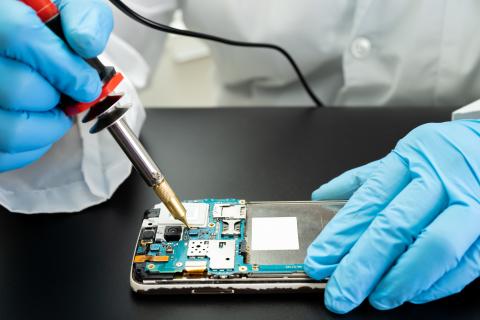
The EESC has suggested that products which cannot be repaired should not be marketed in Europe, and that merely requiring producers to inform consumers when a product cannot be fixed is not enough.
The EU's new Right to Repair is a great step forward on paper, says the EESC. But a consumer wishing to fix a smart phone or an appliance that breaks down rather than buying a new one could stumble into a number of practical hurdles that will make it too hard to or expensive to have it repaired, if not downright impossible. The EU should go further and ask Member States to ban any practice of intentionally making products unrepairable.
There can be no right to repair if objects are designed to be unrepairable
, says Thierry Libaert, rapporteur for the EESC opinion.
In its opinion on the proposed directive, the EESC suggests a number of practical measures to beef it up and ensure that the repair option remains viable and affordable beyond the guarantee period, also from a business perspective. Proposals include:
- offering incentives to opt for repair – even simple ones, like offering an extension of the guarantee period when a product is repaired during that time;
- allowing innovative solutions such as 3D printing to produce spare parts, or refurbishing, which involves giving products a second life, or developing a market for second-hand parts;
- launching training and retraining programmes to teach repairers the skills they need for a job which used to be based on mechanics, but is now increasingly confronted with connected devices. More generally, there is a need to address the shortage of repair workers in Europe.
The repair sector creates value and high-quality jobs in Europe which are hard to delocalise. It generates 404 jobs per 10 000 tonnes of repaired materials – 50 times more than disposing of these materials as waste, which has become the predominant trend in recent years. 65% of consumers dispose of their faulty products, and this translates into 7.5 million tons of waste a year.
Greenwashing: no to claims based on carbon offsets
Like the Right to Repair Directive, the Green Claims Directive is intended to empower Europeans to buy sustainably. Consumers are more and more willing to do so, but have very little trust in producers' claims about the environmental performance of their products and services and are confused by the multitude of green labels on the market.
The new directive should make environmental labels and claims credible and trustworthy, but it has weaknesses. In the EESC's view, it should ban claims based on offsetting, since several consumer authorities and a number of court cases have found that claims such as "climate-neutral" or "plastic-compensated" based on counterbalancing emissions by investing in climate solutions projects (such as planting trees) are scientifically incorrect and always misleading to consumers.
The EESC also flags up the need for consistent legislation. There is a danger that what's pushed out the door comes back through the window
, says EESC rapporteur Angelo Pagliara. The Green Claims Directive should be a model for a minimum level of protection against greenwashing. Its requirements should be reflected in sectoral legislation, so that there is no way to opt out, find loopholes or weaken consumer protection.
Read the EESC opinion on the Right to Repair package
Read the EESC opinion on the Green Claims Directive
Work organisation
Recommended for you
Decision repealing Directive 89/629/EEC
Opinion
ΚΥΡΙΑ ΣΗΜΕΙΑ Η ΕΟΚΕ: θεωρεί ότι η πρόταση της Επιτροπής είναι ικανοποιητική και δεν χρήζει περαιτέρω σχολίων εκ μέρους της, για αυτό αποφάσισε να εκδώσει θετική γνωμοδότηση για το προτεινόμενο…
RePowerEU Plan
Opinion
ΚΥΡΙΑ ΣΗΜΕΙΑ: Η ΕΟΚΕ: θεωρεί ότι το σχέδιο REPowerEU της Ευρωπαϊκής Επιτροπής αποτελεί βήμα προς τη σωστή κατεύθυνση για να καταστεί η ΕΕ ανεξάρτητη από τον εφοδιασμό με ρωσικό φυσικό αέριο και…
Η εργαλειοποίηση των μεταναστών και η προσφυγική κρίση της Ουκρανίας επιβάλλουν ένα νέο ξεκίνημα για τη μεταναστευτική πολιτική
News
Η κρατική εργαλειοποίηση των μεταναστών, που αποσκοπεί στην αποσταθεροποίηση της ΕΕ, και ο τρέχων πόλεμος στην Ουκρανία, που οδηγεί σε πρωτόγνωρη εισροή προσφύγων, επιβάλλουν την επανεξέταση της…
Individual and collective energy self-consumption as a factor in the fight for the green and energy transition, and for economic and social balance
Opinion
Η ατομική και συλλογική αυτοκατανάλωση ενέργειας ως παράγοντας στον αγώνα για την πράσινη και την ενεργειακή μετάβαση, καθώς και για την οικονομική και κοινωνική ισορροπία Κύρια σημεία Η ΕΟΚΕ:…
Equity and efficiency considerations for maritime transportation
Opinion
Θέματα ισότητας και αποτελεσματικότητας για τις θαλάσσιες μεταφορές Κύρια σημεία Η ΕΟΚΕ: υπογραμμίζει ότι η πράσινη μετάβαση του ναυτιλιακού τομέα πρέπει να λαμβάνει υπόψη τα ειδικά ανά χώρα,…