
European Economic
and Social Committee
The EU should ban unrepairable products
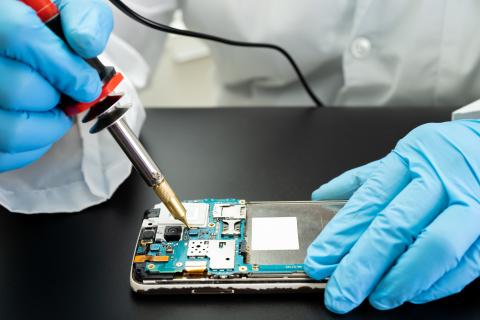
The EESC has suggested that products which cannot be repaired should not be marketed in Europe, and that merely requiring producers to inform consumers when a product cannot be fixed is not enough.
The EU's new Right to Repair is a great step forward on paper, says the EESC. But a consumer wishing to fix a smart phone or an appliance that breaks down rather than buying a new one could stumble into a number of practical hurdles that will make it too hard to or expensive to have it repaired, if not downright impossible. The EU should go further and ask Member States to ban any practice of intentionally making products unrepairable.
There can be no right to repair if objects are designed to be unrepairable
, says Thierry Libaert, rapporteur for the EESC opinion.
In its opinion on the proposed directive, the EESC suggests a number of practical measures to beef it up and ensure that the repair option remains viable and affordable beyond the guarantee period, also from a business perspective. Proposals include:
- offering incentives to opt for repair – even simple ones, like offering an extension of the guarantee period when a product is repaired during that time;
- allowing innovative solutions such as 3D printing to produce spare parts, or refurbishing, which involves giving products a second life, or developing a market for second-hand parts;
- launching training and retraining programmes to teach repairers the skills they need for a job which used to be based on mechanics, but is now increasingly confronted with connected devices. More generally, there is a need to address the shortage of repair workers in Europe.
The repair sector creates value and high-quality jobs in Europe which are hard to delocalise. It generates 404 jobs per 10 000 tonnes of repaired materials – 50 times more than disposing of these materials as waste, which has become the predominant trend in recent years. 65% of consumers dispose of their faulty products, and this translates into 7.5 million tons of waste a year.
Greenwashing: no to claims based on carbon offsets
Like the Right to Repair Directive, the Green Claims Directive is intended to empower Europeans to buy sustainably. Consumers are more and more willing to do so, but have very little trust in producers' claims about the environmental performance of their products and services and are confused by the multitude of green labels on the market.
The new directive should make environmental labels and claims credible and trustworthy, but it has weaknesses. In the EESC's view, it should ban claims based on offsetting, since several consumer authorities and a number of court cases have found that claims such as "climate-neutral" or "plastic-compensated" based on counterbalancing emissions by investing in climate solutions projects (such as planting trees) are scientifically incorrect and always misleading to consumers.
The EESC also flags up the need for consistent legislation. There is a danger that what's pushed out the door comes back through the window
, says EESC rapporteur Angelo Pagliara. The Green Claims Directive should be a model for a minimum level of protection against greenwashing. Its requirements should be reflected in sectoral legislation, so that there is no way to opt out, find loopholes or weaken consumer protection.
Read the EESC opinion on the Right to Repair package
Read the EESC opinion on the Green Claims Directive
Work organisation
Recommended for you
Il-KESE jappella għal regolamentazzjoni b’saħħitha u ssemplifikata tal-kriptoassi
News
Il-Kumitat Ekonomiku u Soċjali Ewropew jappoġġja żieda fir-regolamentazzjoni tal-kriptoassi, b’regoli robusti u koerenti biex l-investituri fl-UE jiġu protetti aħjar, f’konformità mal-miżuri attwali…
L-istrumentalizzazzjoni tal-migranti u l-kriżi tar-refuġjati tal-Ukrajna jappellaw għal bidu ġdid għall-politika dwar il-migrazzjoni
News
L-istrumentalizzazzjoni tal-migranti sostnuta mill-Istat, li għandha l-għan li tiddestabbilizza lill-UE, u l-gwerra attwali fl-Ukrajna, li wasslet għal influss bla preċedent ta’ refuġjati, jagħmluha…
“L-Ewropa Tiegħek, Leħnek” 2023: Iż-żgħażagħ jitolbu UE aktar trasparenti, diġitali u semplifikata
News
Fit-23 u l-24 ta’ Marzu, il-Kumitat Ekonomiku u Soċjali Ewropew (KESE) ospita l-14-il avveniment L-Ewropa Tiegħek, Leħnek!, li laqqa’ fi Brussell 105 studenti minn 35 skola mis-27 Stat Membru tal-UE…
Euro-Med – L-organizzazzjonijiet tas-soċjetà ċivili huma essenzjali biex l-ekonomija u s-soċjetà jaħdmu tajjeb
News
Matul is-sessjoni plenarja ta’ Diċembru tal-Kumitat Ekonomiku u Soċjali Ewropew (KESE) sar dibattitu dwar ir-rikostruzzjoni u r-reżiljenza tar-reġjun Ewro‑Mediterranju wara l-pandemija tal-COVID-19.…
Il-KESE jiftaħ l-applikazzjonijiet għall-Premju tiegħu għas-Soċjetà Ċivili li se jkun qed jindirizza s-saħħa mentali
News
L-organizzazzjonijiet tas-soċjetà ċivili, l-individwi u l-kumpaniji privati issa jistgħu jdaħħlu l-proġetti tagħhom mingħajr skop ta’ qligħ għall-premju tal-KESE ddedikat għall-appoġġ tal-benesseri…