
European Economic
and Social Committee
The EU should ban unrepairable products
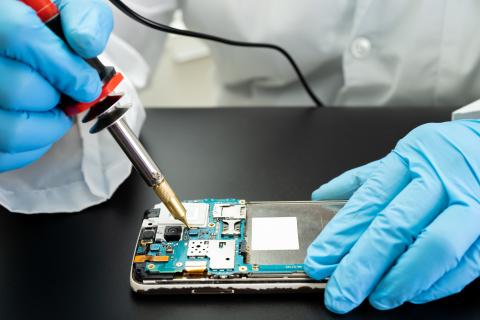
The EESC has suggested that products which cannot be repaired should not be marketed in Europe, and that merely requiring producers to inform consumers when a product cannot be fixed is not enough.
The EU's new Right to Repair is a great step forward on paper, says the EESC. But a consumer wishing to fix a smart phone or an appliance that breaks down rather than buying a new one could stumble into a number of practical hurdles that will make it too hard to or expensive to have it repaired, if not downright impossible. The EU should go further and ask Member States to ban any practice of intentionally making products unrepairable.
There can be no right to repair if objects are designed to be unrepairable
, says Thierry Libaert, rapporteur for the EESC opinion.
In its opinion on the proposed directive, the EESC suggests a number of practical measures to beef it up and ensure that the repair option remains viable and affordable beyond the guarantee period, also from a business perspective. Proposals include:
- offering incentives to opt for repair – even simple ones, like offering an extension of the guarantee period when a product is repaired during that time;
- allowing innovative solutions such as 3D printing to produce spare parts, or refurbishing, which involves giving products a second life, or developing a market for second-hand parts;
- launching training and retraining programmes to teach repairers the skills they need for a job which used to be based on mechanics, but is now increasingly confronted with connected devices. More generally, there is a need to address the shortage of repair workers in Europe.
The repair sector creates value and high-quality jobs in Europe which are hard to delocalise. It generates 404 jobs per 10 000 tonnes of repaired materials – 50 times more than disposing of these materials as waste, which has become the predominant trend in recent years. 65% of consumers dispose of their faulty products, and this translates into 7.5 million tons of waste a year.
Greenwashing: no to claims based on carbon offsets
Like the Right to Repair Directive, the Green Claims Directive is intended to empower Europeans to buy sustainably. Consumers are more and more willing to do so, but have very little trust in producers' claims about the environmental performance of their products and services and are confused by the multitude of green labels on the market.
The new directive should make environmental labels and claims credible and trustworthy, but it has weaknesses. In the EESC's view, it should ban claims based on offsetting, since several consumer authorities and a number of court cases have found that claims such as "climate-neutral" or "plastic-compensated" based on counterbalancing emissions by investing in climate solutions projects (such as planting trees) are scientifically incorrect and always misleading to consumers.
The EESC also flags up the need for consistent legislation. There is a danger that what's pushed out the door comes back through the window
, says EESC rapporteur Angelo Pagliara. The Green Claims Directive should be a model for a minimum level of protection against greenwashing. Its requirements should be reflected in sectoral legislation, so that there is no way to opt out, find loopholes or weaken consumer protection.
Read the EESC opinion on the Right to Repair package
Read the EESC opinion on the Green Claims Directive
Work organisation
Recommended for you
Bearta trédhearcachta
Basic Page
Rinne Biúró CESE cinneadh i bprionsabal an 25 Deireadh Fómhair 2022 go nglacfadh CESE páirt i gClár Trédhearcachta an Aontais Eorpaigh a bunaíodh faoi Chomhaontú Idirinstitiúideach an 20 Bealtaine…
Litir oscailte chomhpháirteach ó Ghrúpa Eagraíochtaí na Sochaí Sibhialta in CESE agus ó Shochaí Shibhialta na hEorpa #EUCivilDialogueNow
Event
PREASEISIÚINT Ní mór d’institiúidí an Aontais an Conradh ar an Aontas Eorpach a urramú agus idirphlé sibhialta struchtúrtha a chur chun feidhme An 24 Eanáir, sheol sochaí shibhialta na hEorpa litir…
Toghadh Séamus Boland ina Uachtarán ar Choiste Eacnamaíoch agus Sóisialta na hEorpa, agus gheall sé go gcuirfear an tsochaí shibhialta i gcroílár na hEorpa
News
Toghadh Séamus Boland na hÉireann ar an 35ú Uachtarán ar Choiste Eacnamaíoch agus Sóisialta na hEorpa (CESE) le haghaidh an téarma oifige 2025-2028. Is urlabhra riamh anall é do phobail na tuaithe…
Eolas faoi CESE
Basic Page
‘Beidh Coiste Eacnamaíoch agus Sóisialta (...) a fheidhmeoidh feidhmeanna comhairliúcháin de chúnamh ag Parlaimint na hEorpa, ag an gComhairle agus ag an gCoimisiún.’1957, Airteagal 13 den Chonradh…
CESE, Uachtarántacht na hÉireann agus an fhís choiteann atá acu
News
I ndiaidh na díospóireachta a reáchtáladh le Comhaltaí CESE le linn sheisiún iomlánach mhí Iúil, níl aon dabht faoi ach go bhfuil clár Uachtaránacht reatha an Aontais ag freagairt go mór do na…