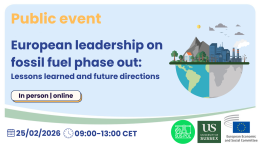
On 25 February 2026, the University of Sussex and the EESC will host an event and workshop on European leadership on fossil fuel phase out: Lessons learned and future directions.
It is taking place at a critical moment - following the outcomes of COP30, amid growing calls for concrete roadmaps to accelerate the transition away from fossil fuels, and ahead of the world’s first summit on a just transition away from fossil fuels in 2026 - the event will examine how EU leadership, experience, and policy tools can help accelerate action within Europe and beyond.
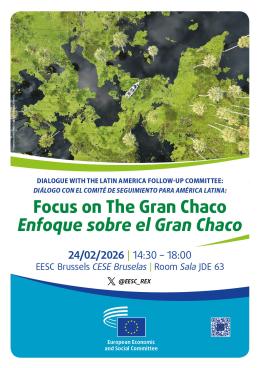
The afternoon session of the Latin America Follow-up Committee meeting to be held on 24 February 2026 will be dedicated to the Gran Chaco. Organised in collaboration with the multi-actor platform Redes Chaco, the network implementing the EU-supported Impacto Verde initiative, this dialogue will spotlight the challenges and opportunities linking the American Gran Chaco to the EU-Latin America agenda.
Meet of the EU-Japan and South East Asia Follow-up Committee
Location
Brussels
Belgium
The EESC EU-Japan & South-East Asia Follow-up Committee meets on 12 February 2026 to discuss various aspects of EU-Japan & South-East Asia relations. Main topics on the programme:
Initial discussion on the priorities for the Follow-up Committee during the new term
EU relations with the Southeast Asian countries and follow-up on the EESC's information report on the situation of the civil society organisations in the ASEAN countries
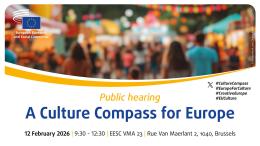
This public hearing will aim to present and discuss the European Commission’s proposal for a Culture Compass for Europe, a new strategic framework intended to place culture at the heart of EU policymaking. The event will gather key institutional actors, civil society organisations, social partners, and experts to reflect on the Compass’s priorities and to contribute to the preparation of the EESC Opinion (SOC/853).
To celebrate Bulgaria's accession to the euro zone, the ECO section organises a public debate to discuss Bulgaria's road to the euro, its prospects as part of the common currency area, and the outlook for the euro area in a world of geopolitical challenges, inflationary pressures and economic uncertainties.
This debate will bring representatives from public actors and civil society to discuss on their views on the Commission proposal to further integrate capital markets and how to make it fit for purpose.
The opinion is being elaborated as an exploratory opinion at the request of the Cypriot Presidency of the Council of the EU.
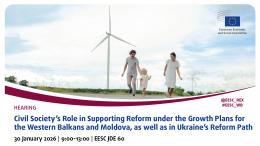
The hearing will examine how organised civil society contributes to implementing reforms within the framework of EU’s Reform and Growth Facility for the Western Balkans and the Ukraine Facility.
First session will feature insights from Brussels based stakeholders, offering perspectives from EU-level actors engaged in the region. The following session will be a discussion with stakeholders from the countries concerned that will provide on the ground viewpoints from civil society representatives and practitioners directly involved in reform processes.
Room JDE63, JDE building, Rue Belliard 99-101, 1040
Brussels
Belgium
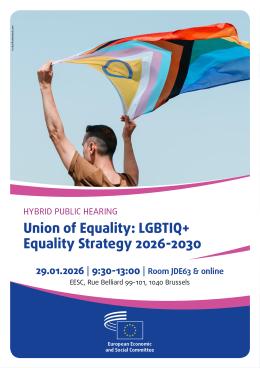
The EESC will hold a public hearing to examine the recently adopted LGBTIQ+ Equality Strategy 2026–2030. The event will bring diverse stakeholders to discuss opportunities and challenges in implementing the strategy’s actions, enforcement of anti-discrimination norms, and strategies to ensure that EU policy frameworks meaningfully foster the Union of Equality. Key questions will focus on mainstreaming LGBTIQ+ equality, monitoring and evaluation frameworks, mechanisms for Member State engagement, and strategies for bridging gaps between EU-level and national practices.
Second meeting of the EU - New Zealand Domestic Advisory Group
Location
Brussels
Belgium
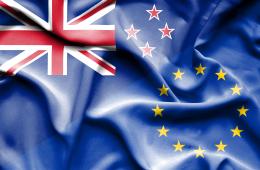
The 2nd EU-New Zealand DAG meeting took place on 28 January in Brussels, focusing on the state-of-play of implementation, including strategic exchanges with New Zealand counterparts and the European Commission. The New Zealand Ambassador to the EU confirmed the strong political commitment to open and rules-based trade, and highlighted the positive trade effects observed since the entry into force of the FTA. DG Trade confirmed that the FTA is proceeding well and confirmed that the first Civil Society Forum meeting should take place in Brussels back-to-back with the TSD Committee later this year. Overall, there is positive momentum of the EU-New Zealand FTA, the central role of civil society in its implementation, and the need for focused, pragmatic and cooperative engagement in the year ahead.