supports the revision of the Tobacco Taxation Directive, recognising the need to adapt the excise framework to market developments, new products and public health objectives, while stressing that the reform must remain proportionate, predictable and economically sustainable;
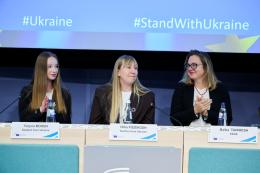
Ahead of the fourth anniversary of Russia’s full-scale invasion of Ukraine, the European Economic and Social Committee (EESC) placed a strong focus on the war’s lasting and complex impact on children and young people. The EESC calls for coordinated European action, with strong involvement from civil society and international partners, to help young Ukrainians recover and look to the future with hope.
fully supports the Commission’s efforts to promote a more comprehensive and holistic approach to tackling VAT fraud by enabling the European Public Prosecutor’s Office (EPPO) and the European Anti-Fraud Office (OLAF) to access value added tax (VAT) data under Council Regulation (EU) No 904/2010;
regrets that the Commission has once again refrained from presenting the Annual Sustainable Growth Survey (ASGS) and stresses that sustainable economic growth is a necessary condition for Europe to meet its multiple commitments, welcomes the European Macroeconomic Report, which provides a deep dive into the underlying structural challenges facing the EU and the new recommendation on human capital, which is a crucial element in filling the EU technological gap, also taking into account the EU demographic challenge;
welcomes the Strategy for European Life Sciences, and stresses that ensuring a holistic approach and a nourishing environment can make Europe a global leader in the life science (especially for rare diseases and genomics). Such an approach involves:
o comprehensive scientific and data-based methods to diagnose and understand the causes of diseases (e.g. genetics, unhealthy habits and lifestyles, pollution, stress, etc.);
o disseminating information on prevention and early diagnosis;
o screening, effective and accessible treatment;
o high-quality care and accessible support infrastructure for patients and their families.
stresses that the European electricity sector must have the capacity to plan the needs of the electricity system at EU level and in partner countries, based on a common energy scenario set out by the Commission and national system operators.